




This special interview, led by Lorena Aceves, spotlights the voices of women researchers shaping the future of STEM education research. In honor of Women’s History Month, Samantha Holquist, Claire Kelley, and Joy Thompson share their insights on where STEM education is headed and the critical challenges and opportunities ahead. Their discussion highlights the cutting-edge work happening at Child Trends and the role of research in driving meaningful change in education. Listen to the full interview for a deeper dive, and explore key takeaways below in this engaging, interactive format.
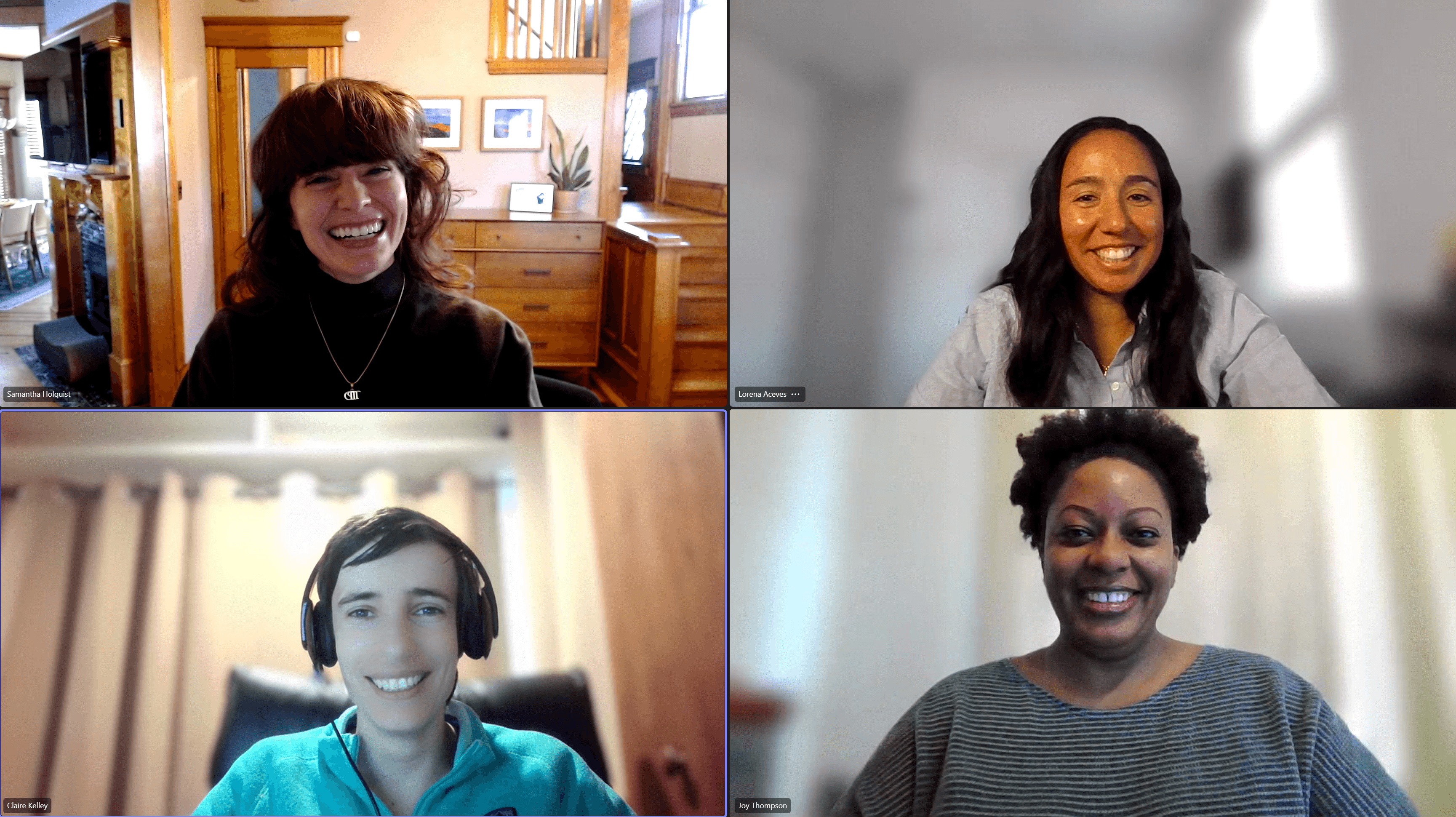 Play video
 What inspired each of you to do STEM education research? What provided the spark?
Takeaway: Everyone’s journey into STEM education research is unique, shaped by personal experiences, unexpected turns, and pivotal moments of inspiration.
- Joy Thompson began her research in reading development but, as she explored student achievement data, she became fascinated by the role of math tracking in shaping students’ persistence in STEM. She wanted to understand why students with similar abilities can end up on very different STEM pathways, a curiosity that began her journey as a STEM education researcher.
- Samantha Holquist struggled with dyslexia, making math a challenge until a dedicated teacher found creative ways to engage her. That early support changed the course of her education, fueling her decision to become a STEM researcher and her commitment to ensuring that students receive the encouragement and resources they need to succeed in STEM.
- Claire Kelley always viewed the world through a mathematical lens, making her transition into data science feel natural. But through her research, she realized that students arrive at STEM careers from many different entry points—whether through video games, engineering, or a problem-solving curiosity. Claire became passionate about understanding what shapes those journeys.
Why it matters: The path to STEM careers isn’t one-size-fits-all. Encouraging early engagement, breaking down barriers, and ensuring that students see themselves as capable STEM learners can help build the next generation of researchers, educators, and innovators.
 How have your professional journeys shaped your STEM education research, in general?
Takeaway: Behind every researcher is a story—an experience that fuels their passion and shapes the questions they seek to answer. For these STEM education researchers, their personal academic paths drive the work they do today.
- Joy Thompson knows firsthand how early academic experiences can influence a student’s confidence in STEM. She remembers the sting of a poor math grade in first grade and the supportive teacher who helped her push forward. Now, her research focuses on how students’ identities and motivations impact STEM persistence, particularly how schools can better support students to see themselves as capable in math and science.
- Samantha Holquist centers her work on students who struggle in STEM classrooms because she was once one of them. Her dyslexia made learning math difficult, but having teachers who believed in her made all the difference. Today, she researches how to ensure that all students, especially those with learning challenges, have access to high-quality STEM instruction and the encouragement they need to succeed.
- Claire Kelley came to STEM education research through data science, drawn to the power of analytics in understanding student outcomes. She studies patterns in STEM education, using artificial intelligence (AI) and statistical modeling to examine why some students persist in STEM fields while others drop out. Her goal is to uncover hidden trends and inform policies that create more equitable opportunities in STEM education.
Why it matters: Research isn’t just about data: It’s about understanding real students’ experiences and identifying what helps them succeed. When researchers draw from their own academic journeys, they can uncover practical solutions to ensure that all students can thrive in STEM, regardless of their background or learning style.
 From your perspective, why is research important? What impact do you believe your research has on schools, communities, and/or the world at large?
Takeaway: Research, in this context, is about finding real solutions that help students succeed and giving teachers the tools they need to make a difference.
- Samantha Holquist emphasized that research is most effective when educators and students are directly involved; after all, they are the ones who experience challenges firsthand. When researchers partner with educators and students, they can better understand what works in the classroom and what does not. This collaboration leads to practical improvements, such as refining math instruction and developing new ways to keep students engaged in STEM. Without this kind of research, education policies and practices may be based on assumptions rather than real experiences.
- Joy Thompson pointed out that, while schools collect their own data on student performance, they often lack a broader perspective. External research helps schools compare their efforts with others, identify successful strategies, and refine their approaches. Without this bigger picture, it can be difficult to see what is working and where changes are needed.
Why it matters: Without research, education would rely on guesswork rather than evidence. Research helps identify the most effective STEM teaching methods, the practices that best engage students, and the ways schools can support students’ success in STEM. Ultimately, it ensures that educators and students have the knowledge they need to succeed.
 Where do you all think the world of STEM education research is headed? What opportunities and challenges do you foresee?
Takeaway: STEM education is rapidly evolving, driven by advancements in data, AI, and the need to connect learning to real-world careers. Researchers see both opportunities and challenges in shaping the future of STEM education.
- Claire Kelley predicts that AI and learning analytics will transform how educators understand and improve student learning. Schools and online platforms already collect vast amounts of data on how students interact with lessons, assessments, and digital tools. AI can analyze these patterns to identify learning gaps, personalize instruction, and help educators provide targeted support. However, as AI becomes more embedded in education, schools must also navigate challenges such as data privacy, ethical AI use, and the need to ensure that technology enhances rather than replaces human interaction in learning.
- Samantha Holquist highlighted the need to align STEM education with workforce demands to show educators, students, and families a clear connection between learning in school and the skills students will need in their careers. Many students disengage from STEM because they do not understand how these subjects will apply to real life. Samantha pointed to innovative programs where students explore STEM career pathways as early as first grade, giving them a foundation for understanding how the skills they learn will be relevant in the future job market. She also emphasized that interdisciplinary learning—integrating STEM with social sciences, the arts, and real-world problem-solving—is essential for preparing students for the challenges of tomorrow.
Why it matters: As technology and industries evolve, STEM education must keep pace. Schools need to incorporate AI and data-driven insights, create hands-on learning experiences, and ensure that students are equipped with the skills employers will need in the coming decades. Making STEM education engaging, relevant, and forward-thinking will help build a workforce that is ready for the future.
 If talking to young women interested in pursuing STEM education research, what would be your words of wisdom?
Takeaway: For young women considering a career in STEM education research, the path may not always be easy, but persistence, confidence, and passion can make all the difference. The researchers in this discussion shared their best advice for those looking to enter the field.
- Claire Kelley emphasized that persistence matters more than intelligence. Success in STEM is not about always having the right answer but about being willing to put in the effort to solve tough problems. Whether tackling a difficult math equation, refining a research method, or developing new ways to analyze data, those who keep working are the ones who succeed. Hard work and determination are more important than natural ability.
- Samantha Holquist reminded young women that they belong in STEM—and that their perspectives are necessary. While it’s normal to question oneself at times, STEM fields thrive when people with different perspectives bring solutions to the table. Young women willing to put in the effort and think critically can make a real impact on education and the future workforce.
- Joy Thompson encouraged young women to follow their interests and pursue big ideas with confidence. Some of the greatest innovations in history started as simple questions. Whether it’s intended to improve math education, understand what motivates students, or explore how technology can enhance learning, meaningful research comes from people willing to think boldly and put their ideas into action.
Why it matters: Women are making significant contributions in STEM, and the field benefits when more individuals bring their skills and perspectives to the table. With hard work, determination, and a willingness to take on challenges, young women can build rewarding careers in STEM education research and help shape the future of learning.
Final thought: STEM education research that drives change
At Child Trends, we go beyond simply conducting research studies to ensure that STEM education research leads to real impact. Our work focuses on equipping students with the skills they need to succeed, giving educators the tools to improve instruction, and helping schools prepare the workforce of tomorrow. We also drive innovation in STEM education research, whether by harnessing AI to personalize learning, designing curricula that make math and science more engaging, or shaping policies to ensure that all students have access to high-quality STEM instruction. By focusing on real-world applications, our work helps bridge the gap between theory and practice, ensuring that STEM education remains relevant, effective, and aligned with the needs of a changing economy.
Suggested citation
Aceves, L., Holquist, S., Kelley, C., & Thompson, J. (2025). Women lead the future of STEM education research at Child Trends. DOI: 10.56417/3399m3684s