



This series from the Innovation to Evidence Project team at Child Trends is for practitioners, policymakers, and researchers who want to transform K-12 school systems to better meet the needs of students, families, and communities. This guide focuses on the use of artificial intelligence (AI) in improving the classroom experience for teachers and students.
Tools like ChatGPT and Gemini that employ artificial intelligence (AI) are becoming part of our day-to-day lives. As we educate our next generation of citizens and workers, it is imperative that teachers and students are prepared for an AI-filled future. To this end, our team created the AI-Class Framework for Integrating AI Into Classroom Teaching and Learning. The AI-Class Framework is meant to support school administrators and teachers in creating positive and safe AI-assisted teaching and learning experiences in the classroom.
In this practice guide, we unveil our rationale for creating AI-Class and lay out each of its components. We intersperse our guidance with realistic examples, marked as “learning pauses,” of a fictional school principal using elements of AI-Class to integrate AI into teaching at her school. Throughout, we also refer readers to other frameworks that influenced our own work, or that may supplement AI-Class in helping school systems integrate AI.
Why the education system needs an AI Framework
Data show that students are employing AI to create personalized learning experiences, gain access to tutoring, and complete homework assignments. However, only a very small number of teachers report using AI technology. As in many facets of education, teachers should play a crucial role in guiding students' productive use of AI, but teachers may lack sufficient training and resources—such as prompt engineering skills—to do so effectively. Further, as a new technology, AI is not well integrated into existing curricula, further complicating teachers’ ability to support productive and safe student use of AI tools both inside and outside the classroom. New resources like AI-Class are needed to help school administrators, teachers, and students productively and safely use AI in teaching and learning.
Learning Pause 1
[audio m4a="https://media.childtrends.org/media/Learning-Pause-1.m4a"][/audio]
Several research-informed frameworks guided our development of AI-Class
Frameworks to guide teachers’ and students’ use of technology abound. Prominent examples include A Framework for AI Co-Creation in Pedagogy (AI-CoACT); Technological Pedagogical Content Knowledge (TPACK); the Substitute, Augmentation, Modification, and Redefinition (SAMR) model; and the Emerging Technology Adoption Framework. Although diverse frameworks are available, they can be inaccessible to school administrators and teachers as they are created for academic audiences, locked behind paywalls, or not clearly applicable to education environments. However, each of these frameworks provides important guidance for understanding the use of AI in classroom teaching and learning.
Introducing our Framework for Integrating AI Into Classroom Teaching and Learning (AI-Class)
Our team adapted the previously discussed prominent frameworks to create the AI-Class, which is designed to support school administrators and teachers as they integrate AI in their daily education practices.
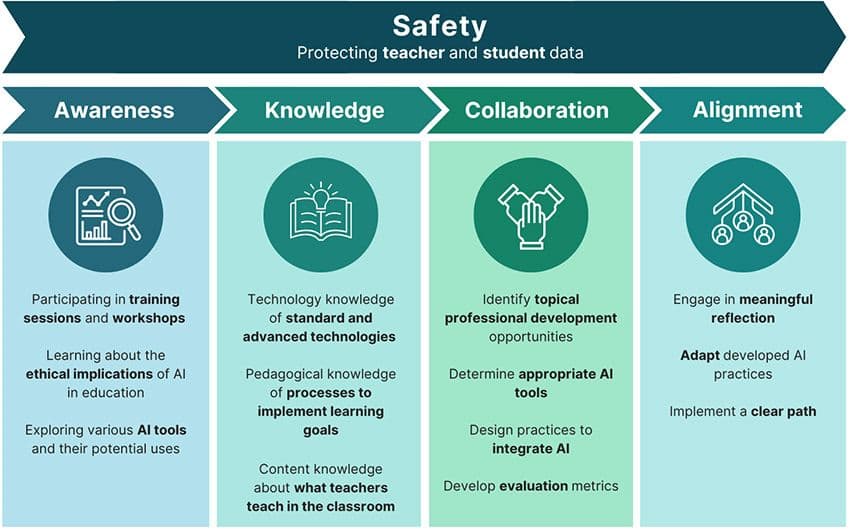
Figure 1 outlines the main components of the AI-Class Framework. Below the figure, we explain how the Framework is organized and describe each component in detail.
For support in assessing potential risk of using AI in education, check out our AI Risk Framework.
Figure 1. The AI-Class Framework
Awareness
The first component of AI-Class focuses on raising school administrators’ and teachers’ understanding of their experiences with AI technology, which impacts whether and how administrators and teachers engage with AI. There are three main activities to help raise awareness:
- Participating in training sessions and workshops on AI technologies
- Learning about the ethical implications of AI in education
- Exploring various AI tools and their potential uses in teaching and learning
Teachers have their own unique experiences and perspectives about AI. For example, if teachers believe that AI is not positive for education, then they may be less likely to embrace AI to support their teaching experiences. On the other hand, teachers who have had some AI training may be more likely to embrace it.
Learning Pause 2
[audio m4a="https://media.childtrends.org/media/Learning-Pause-5.m4a"][/audio]
Knowledge
The second component of AI-Class is building school administrators’ and teachers’ knowledge and skills for integrating AI into classrooms. Teachers have their own knowledge and skills in using technology, which can be built on to support their use of AI. Three key knowledge areas are:
- Technological knowledge refers to one’s understanding of both standard and advanced technologies.
- Examples of standard technology include books, whiteboards, and interactive teaching kits.
- Examples of advanced technology include the internet, digital video, and AI.
- Pedagogical knowledge refers to the processes, practices, and methods that teachers use to implement instructional and student learning goals.
- Content knowledge refers to knowledge that teachers have about the content area(s) that they teach in the classroom.
Teachers require all three types of knowledge to successfully integrate AI into teaching and learning. School administrators must help teachers recognize their existing knowledge and skills and then enhance them to fill any gaps.
Learning Pause 3
[audio m4a="https://media.childtrends.org/media/Learning-Pause-2.m4a"][/audio]
Collaboration
AI-Class’ third component focuses on collaboration between school administrators and teachers on designing process and practices to integrate AI into teaching and learning. By bringing together their AI awareness and knowledge, school administrators and teachers can work together to:
- Identify professional development opportunities to build AI awareness and knowledge.
- Determine which AI tools can be used within teaching and learning (i.e., schools may want to limit students’ access to certain AI tools).
- Design practices for integrating AI into classroom teaching.
- Develop evaluation metrics to understand how AI may impact teaching and learning.
These activities can happen sequentially or concurrently. However, if there is a large gap in AI awareness and knowledge, it is important to develop these components before designing AI practices.
Alignment
The fourth AI-Class component focuses on aligning these jointly developed processes and practices with teachers’ existing curricula and instructional practices. For this alignment process to be successful, the following strategies should be implemented:
- Engage in meaningful reflection. Reflection is a great strategy for ensuring that AI use aligns with teachers’ current curricula, practices, and processes. The world of AI can be complex and confusing, but it can be useful to enhance the classroom experience. Making time for meaningful reflection can increase the likelihood that AI will be beneficial and lower teachers’ burden.
- Adapt developed AI practices. Teachers are already doing many great things with their classroom curricula, practices, and processes, so the best approach to integrate AI may be to adapt AI practices to fit teachers’ needs. Teachers should not have to change what they are already doing, especially if it is working well for them and their students. Schools can support teachers and provide them with tools to adapt AI to align with their existing teaching style and preferences.
- Implement a clear plan. A clear plan ensures the integration and alignment of AI with current instructional practices. This action plan can serve as an accountability measure and checklist to support teachers as they navigate the integration of AI into their current instructional practices. The plan can also involve giving teachers access to resources that can help them overcome road bumps.
Learning Pause 4
[audio m4a="https://media.childtrends.org/media/Learning-Pause-3.m4a"][/audio]
Safety
The final element of AI-Class cuts across Awareness, Knowledge, Collaboration, and Alignment—ensuring teacher and student safety while using AI, especially given the risks that technology can pose. Prior research suggests that teachers and students may have limited conceptions of cybersecurity risks, especially those that relate to how data are used to generate algorithmic recommendations. The Information and Communications Technology framework emphasizes the importance of educating students to promote productive use of technology while raising awareness of risks posed by exposure to inappropriate content and excessive usage. The key safety risk to consider is centered around teacher and student privacy. Specific concerns include:
- Teacher data. Teacher data that can be compromised by AI can include lesson plans or any material that they develop that is their intellectual property.
- Student data. For students, the data risk can be higher, especially if students are inputting personal information or details into AI tools.
School administrators must ensure that the AI approved for use in their schools protects teacher and student data so as to not expose any personal information. Most importantly, teachers and students should be aware of what protections they do or do not have when engaging with AI tools for educational purposes.
Learning Pause 5
[audio m4a="https://media.childtrends.org/media/Learning-Pause-4.m4a"][/audio]
Check out our blog to learn more about the potential benefits and risks of AI in education.
AI in real time: a teacher shares their experience with AI
For more detail about the how AI-Class Framework might work in real practice, our team interviewed a middle school computer science teacher. The following interview with Rowen Elsmore from Bloomington School District in Minnesota highlights the benefits and challenges of using AI in the classroom.
 Play video
Conclusion
The AI-Class Framework is a great resource for helping school leaders learn how their schools can integrate and implement AI into teachers’ instructional practices. We hope the framework is a useful starting point for integrating AI into teaching and learning experiences within your schools.
Resources
- Creating an AI Risk Framework for Education to Protect Students, Families, and Teachers (Claire Kelley, Samantha Holquist, and Lorena Aceves at Child Trends)
- Teachers Must Be Equipped to Guide Students’ Growing Use of AI to Learn Math (Samantha Holquist, Claire Kelley, Alyssa Scott, Diane Hsieh, Marisa Crowder, Mark Yu, and Lorena Aceves at Child Trends)
- AI Guidance for Schools Toolkit (Pat Yongpradit et al. at Code.org, Consortium for School Networking, Digital Promise, European EdTech Alliance, and Policy Analysis for California Education).
- A Framework for the AI Co-Creation in Pedagogy (Dr. Anjali Rajan Puthiyedath, Apple Professional Learning Specialist)
- Technological Pedagogical Content Knowledge: A Framework for Teacher Knowledge (Punya Mishra and Matthew Koehler at Michigan State University)
- Emerging Technology Adoption Framework: For PK-12 Education (Pati Ruiz et al. at Digital Promise)
Suggested citation
Aceves, L., Holquist, S., & Kelley, C. (2024). AI-Class Framework for Educators and Administrators. Child Trends. DOI: 10.56417/4780r6390a