A Toolkit for Juvenile Justice Agencies to Help Young People Heal and Thrive During and After Natural Disasters
14%
Approximately 14 percent of children and youth have experienced at least one natural disaster prior to age 18 and most children and youth have been affected by a pandemic—COVID-19.
The United States is among the top five countries in the world that are most affected by natural disasters, with an average of over 20 natural disasters per year from 2010-2020.
Young people are especially vulnerable to the negative effects of natural disasters, and those who are involved in the juvenile justice system are at particularly high risk for experiencing disaster-related traumatic stress and other mental health and behavioral challenges.
However, all children and youth have the capacity for resilience and healing when they receive the right types of supports.
This Toolkit is for juvenile justice staff, supervisors, and administrators who work with and on behalf of children, youth, and families who experience a natural disaster. The information and resources included in the Toolkit provide evidence- and trauma-informed guidance for promoting positive outcomes for children and youth who experience natural disasters.
The complete version of this toolkit, including full references, is available in English or Spanish.

This evidence-informed Toolkit was developed by Child Trends with support from The Annie E. Casey Foundation and in partnership with the National Child Traumatic Stress Network. The information and resources contained in the Toolkit aim to support juvenile justice staff and administrators in their efforts to enhance state, tribal, territory, and county-led efforts to promote healing and resilience among system-involved children and youth who are exposed to a natural disaster. The materials in the Toolkit have not been tested with children and youth during pandemics, which occur only rarely (e.g., every 25-30 years for influenza pandemics), but they may nonetheless be useful during and after pandemics given that natural disasters and pandemics have a number of similar challenges.
Staff and administrators can use the information and resources in the Toolkit to promote healing and resilience among children and youth in the juvenile justice system during and after a natural disaster. The Toolkit can also be integrated into state, tribal, territory, county, and agency disaster plans.
Intended Audience
A Toolkit for Juvenile Justice Agencies to Help Young People Heal and Thrive During and After Natural Disasters is a collection of tools and resources for juvenile justice frontline staff and administrators and their community partners. Many children and youth are involved in both the child welfare and juvenile justice systems, but this Toolkit presents separate information and recommendations for each system to ensure that the resources are as relevant as possible to each service setting.
Adversity is a broad term that refers to a wide range of circumstances or events that pose a serious threat to an individual’s physical or psychological well-being.
Anti-bias is opposing discrimination against people based on race, ethnicity, religion, sexual orientation, gender identity, or other factors.
Anti-racist is a process of explicitly identifying and opposing racism and the policies, systems, and behaviors that perpetuate racism.
Complex trauma occurs when an individual is exposed to multiple forms of severe and chronic trauma that often begin early in life and occur in the context of important interpersonal relationships.
Equity is just and fair inclusion. Equity is achieved by environments, systems, and policies that support equal access to opportunity.
Gender identity is a personal sense of one’s own gender as male, female, or another gender (e.g., gender neutral, non-binary, transgender).
Natural disaster is a natural event such as a flood, earthquake, or hurricane that may cause great damage or loss of life.
Healing is the process of repairing and recovering from disruptions to an individual’s well-being.
Pandemic is an outbreak of a disease that occurs over a widespread geographic area and affects a significant proportion of the population.
Prevention is the process of stopping problems from arising (e.g., mental health problems, developmental or behavioral problems, disease). Primary prevention aims to avoid the development of symptoms or distress in individuals from occurring in the first place; secondary prevention aims to detect and address problems as early in their course as possible; and tertiary prevention aims to reduce the negative impact of already established problems by helping individuals return to healthy functioning.
Program, community, and youth voice means that program, community, and youth expertise is prioritized through the inclusion and active participation of these groups in the development of interventions, resources, and supports designed for them.
Protective factors are conditions or attributes of individuals, families, communities or the larger society that mitigate or eliminate risk.
Resilience is the process of positive adaptation to adversity that arises through interactions between individuals and their environments.
Secondary adversities are often generated by traumatic incidents and can impact different aspects of an individual’s life. Examples of secondary adversities that can accompany a natural disaster are loss of property or possessions, the death of a loved one, or long-term displacement or relocation.
Secondary traumatic stress is stress that results from learning or hearing about trauma experiences of someone else.
Sexual orientation refers to the sex of those to whom one is sexually and/or romantically attracted (e.g., lesbian, gay, bisexual, heterosexual, asexual, pansexual).
Trauma is one possible outcome of exposure to adversity. Trauma occurs when a person perceives an event or set of circumstances as extremely frightening, harmful, or threatening—either emotionally, physically, or both—and it overwhelms their capacity to cope.
Traumatic stress is any feeling of distress related to exposure to a traumatic event(s).
This Toolkit has three sections:
- Go to Recommendations
Section 1, Recommendations for Promoting Healing and Resilience Among Youth Involved in Juvenile Justice Who Experience Natural Disasters: Provides actionable recommendations for administrators, supervisors, and staff to prepare for natural disasters and respond to children and youth involved in these systems who experience a natural disaster.
- Go to Healing and Resilience
Section 2, Promoting Healing and Resilience After Natural Disasters for Youth Involved in Juvenile Justice: Provides an overview of trauma-informed care and resilience for children and youth involved in the juvenile justice system who experience a natural disaster.
- Go to Interventions
Section 3, Interventions to Support Healing and Resilience Among Youth and Families Who Experience a Natural Disaster: Provides an overview of promising and evidence-based, trauma-informed frameworks and interventions to support children and youth who experience a natural disaster.
Section 1
Recommendations for Promoting Healing and Resilience Among Youth Involved in Juvenile Justice Who Experience Natural Disasters

This section includes actionable recommendations for juvenile justice administrators, supervisors, and staff to support youth and families involved in the juvenile justice system who have experienced a natural disaster. Many of these recommendations may also be useful for responding to a pandemic. Recommendations are organized by timing of implementation—before a disaster occurs, during or immediately afterward, or for the intermediate and long-term recovery.

How to prepare before a natural disaster occurs
Ensuring that your agency is prepared and trauma-informed can go a long way to help youth recover and heal from a natural disaster. Below are recommendations for administrators, supervisors, and staff to prepare for how to promote healing and resilience among youth when a natural disaster occurs.
Recommendation 1 for Administrators:
Juvenile justice administrators should establish natural disaster-specific plans and policies that align with trauma-informed care and prioritize the emotional and physical well-being of youth.
Ensure that natural disaster planning includes specific information about how to address youth and staff emotional well-being and trauma. Consider establishing memorandums of understanding with mental health agencies to assist in resource sharing and recovery.
Develop partnerships with community agencies, organizations that tailor resources to specific populations (e.g., youth who are immigrants or from families of immigrants, LGBTQ+ youth), and religious organizations for assisting families with basic needs (e.g., clothing, food pantries).
Engage in formal partnerships with local emergency response and community agencies to ensure the juvenile justice agency and system is included in community preparedness.
Share comprehensive disaster plans widely within and outside the juvenile justice agency to ensure all stakeholders have access to natural disaster response information. Practice disaster plan implementation regularly with staff, including drills and evaluations of the drills (e.g., identifying lessons learned, amending plan as needed). Sharing and practicing disaster plans in advance of a natural disaster helps agencies collaborate and implement plans more effectively when the disaster does occur.
Provide training and staff development on how to effectively implement the disaster plan. Consider cross-agency trainings involving all individuals who may interact with youth during a natural disaster to promote relationship-building and collaboration, including parents/caregivers; community members; and child welfare, mental health, first responders, schools, and emergency personnel.
Recommendation 1 for Supervisors and Staff:
Juvenile justice supervisors and staff should work together with families to draft emergency plans before a natural disaster occurs and ensure the plan aligns with a trauma-informed approach and prioritizes the emotional well-being of youth.
Partner with children, youth, and families to develop a preparedness, safety, and communication plan and encourage families to practice it regularly. The plan should include measures for ensuring physical safety when a disaster occurs (e.g., shelter in place, escape routes), tailored to the type(s) of disaster that occur in the local area. The plan should also address what to do when children are at home and school. Include plans for communication in the event that the child or youth becomes separated from their parent/caregiver(s) during the disaster, including easily accessible contact information for family members, caseworkers, therapists, and other supports. Identify alternative, safe placement in the event of evacuation. Review and practice the plan every few months, particularly with youth who may experience changes in placement or who may be transitioning out of care. For a sample family preparedness, safety, and communication plan, download the NCTSN family preparedness plan and wallet card.

Ensure that youth and families are informed about the nature and timing of common disasters and pandemics in your area (i.e., what time of year they tend to occur), common reactions among youth (particularly those with trauma histories), and how to access updated official disaster information.
Assist families and facility staff to identify reliable sources of information about natural disasters (e.g., website, radio, emergency lines). Encourage parents/caregivers and staff to give youth factual information about the natural disaster in simple, developmentally appropriate terms. Share apps with parents and caregivers for ideas on talking with youth about natural disasters (e.g., Help Kids Cope app, Bounce Back Now app).
Assemble an emergency supply kit and plans for meeting basic needs. Youth should have access to enough water, food, and other emergency supplies for at least 3 days and secure access to medications for at least 7 days. Help children, youth, and their caregivers identify resources for basic needs after emergency supplies have been used, including whom to call for support. For a list of resources and templates for family emergency planning, go to https://www.ready.gov.
Recommendation 2 for Administrators:
Juvenile justice administrators should implement or enhance comprehensive, agency-wide, and system-wide policies, procedures, and infrastructure that are trauma-informed and that prioritize the emotional and physical well-being of youth.
Include trauma-informed principles and language in agency-wide policies and procedures, identifying exposure to natural disaster as a type of adversity that can lead to trauma.
Conduct an organizational self-assessment for trauma-informed organizations. To get started, see the Put It Into Practice #4 resource.
Implement agency- and system-wide training using an evidence- and trauma-informed curriculum tailored for justice-involved youth (e.g., National Child Traumatic Stress Network Think Trauma, Sanctuary Model).

Develop strong partnerships with mental health providers and related community organizations, as well as a system for referrals and follow-up. See Section 3 of this toolkit for a list of evidence-informed trauma and mental health interventions for youth involved in juvenile justice.
Conduct universal screening using a valid, reliable, and age-appropriate and culturally-sensitive universal screening tool to identify types of adversity exposure and symptoms of trauma in response to a natural disaster (e.g., UCLA Brief COVID-19 Screen for Child/Adolescent PTSD; Child PTSD Symptom Scale). Screening for adversity and trauma should be conducted as one component of a comprehensive, developmentally sensitive approach to assessing strengths and needs, including resilience and protective factors (e.g., PACEs Questionnaire).
Recommendation 2 for Supervisors and Staff:
Supervisors and staff should seek out and participate in trauma-informed and natural disaster-specific training and professional development to learn about practices that promote social and emotional well-being and positive development and behavior among youth who have experienced trauma.
Engage in comprehensive training and professional development opportunities in trauma-informed practices applicable for juvenile justice supervisors and staff (e.g., NCTSN Think Trauma, Sanctuary Model).
Complete training in evidence-informed, trauma-focused models for natural disaster preparedness and response, such as Psychological First Aid (PFA).

Conduct universal screening for adversity and trauma symptoms with youth, using a valid, reliable, and developmentally- and culturally-sensitive tool (e.g., UCLA Brief COVID-19 Screen for Child/Adolescent PTSD; Child PTSD Symptom Scale; Young Child PTSD Screener).
Become familiar with evidence-based treatments and supports for youth experiencing trauma; develop relationships with providers, community agencies, and schools that offer these types of services and supports; and make appropriate referrals to support the emotional well-being of children and youth. For a list of these approaches, see Section 3 of this toolkit and reference intervention registries such as the California Evidence-Based Clearinghouse for Child Welfare or Blueprints for Healthy Youth Development, to obtain specific information on types of interventions, their level of evidence, for whom interventions were designed, and eligibility for federal reimbursement.
Recommendation 3 for Administrators:
Juvenile justice administrators should ensure that natural disaster policies and procedures that incorporate anti-racist, anti-oppression guidance address the needs of youth who are disproportionately impacted by natural disasters and other adversities and/or who are overrepresented in the juvenile system, including Black, Latinx, American Indian, Alaska Native, and LGBTQ+ youth.
Create a senior management position dedicated to promoting diversity, equity, and inclusion at the organizational level and ensure the individual in this position participates in natural disaster preparedness and response planning.
Actively partner with the youth and families (e.g., through focus groups, committees, or other approaches) to develop language, review and assess outcome information on disparate impact, and utilize equity-focused resources to guide disaster response planning. Ensure you partner with groups who are overrepresented in juvenile justice.
Incorporate anti-racist and anti-discrimination policies and procedures within disaster plans and policies to reduce inequities in the juvenile justice system using a systematic approach, such as a racial equity impact analysis (REIA). Establish a policy review team to conduct the REIA of disaster plans and policies, ensuring representation of impacted groups on the team.

Establish a plan for supporting the basic needs of families during a natural disaster, particularly in communities with high levels of poverty and lack of access to basic resources and services (e.g., provision of culture-specific foods, clothing, religious supports).
Incorporate LGBTQ+ responsive language and approaches in disaster plans and policies and explicitly outline strategies for staff to affirm LGBTQ+ identities and strengths during a natural disaster. Ensure supports are applicable to both families of choice and families of origin for LGBTQ+ youth.
Recommendation 3 for Supervisors and Staff:
Supervisors and staff should engage in professional development and practices that are anti-racist and anti-oppressive, and that address disproportionality of representation in the juvenile justice system.
Seek out and participate in training and professional development on racial diversity, equity, and inclusion, particularly regarding disproportionality in the juvenile justice system. The California Evidence Based Clearinghouse has rated several models on their evidence for reducing disproportionality (e.g., Family Assessment Response, Preliminary Protective Hearing Benchcard)—become familiar with these models and their practices.
Seek out and participate in training on the needs of LGBTQ+ youth,, using formalized resources and models. Use identity affirming language when working with youth, ensure that resources are LGBTQ+ focused and affirming, and identify LGBTQ+-affirming referrals for outside services.
For youth who are institutionalized, do not use solitary confinement to separate LGBTQ+ youth from the rest of the population or in an attempt to protect them from harassment and abuse, as solitary confinement can be detrimental to youths’ mental health and isolation may not actually improve safety.
Talk and raise awareness about diversity, equity, and inclusion. Explicitly ask staff about discrimination and racism they have experienced and seek ways to address and prevent future harm. Engage in meaningful conversations with supervisors and colleagues about racial and ethnic diversity in the workforce. These discussions should be intentional and semi-structured. Group discussions should be moderated by a leader with expertise in diversity, equity, and inclusion and should follow best practices for discussing these topics.
Recommendation 4 for Administrators:
Juvenile justice administrators should establish staff protocols for maintaining regular contact with youth during and after a natural disaster occurs.
Establish formal protocols for frequent and ongoing contact with youth and families during and after a natural disaster occurs to monitor their physical and emotional risk, safety, and well-being and to keep them informed about the disaster and available resources while following safety guidelines.
Build agency capacity for a seamless transition to virtual contact, visits, and services (e.g., telehealth) before a natural disaster occurs and continuously monitor opportunities for emergency and grant funding for technology supports.
For youth who are on community supervision, reduce or adjust reporting requirements concerning the frequency of meetings with probation or parole officers.
Develop electronic and printable resource libraries for staff to quickly access and provide information to youth and their parents/caregivers on natural disasters, their effects, and approaches to addressing physical and emotional needs of youth.
Recommendation 4 for Supervisors and Staff:
Juvenile justice supervisors and staff should partner with youth and families to establish communication plans in the event of a natural disaster and review the plans regularly.
Incorporate natural disaster communication plans into regular goal setting and service planning with youth and families, including contingency plans for when in-person contact is unavailable, methods for getting in touch with loved ones within and outside the home or residential setting, and alternative emergency contacts and supports when electronic communication may be limited.
Review the natural disaster communication plan regularly or any time a placement change or other major transition occurs.
Identify and become familiar with natural disaster-related resources for families and consider keeping printable copies of resource lists on natural disasters, their effects, and approaches to addressing physical and emotional needs of youth and their families. Keep resources easily accessible to staff, youth, and their caregivers.
For youth in institutional settings, identify creative methods and flexibility in agency operations to help them connect with family members, friends, attorneys, and other social supports during and after a natural disaster (e.g., increased access to video or phone visits, alternative communication schedules, etc.).
Recommendation 5 for Administrators:
Juvenile justice administrators should establish an organizational culture that prioritizes the physical and emotional well-being of staff and administrators.
If staff were directly impacted by the disaster, take immediate steps to support their physical and emotional well-being by connecting staff with available supports within the agency/system and in the community.
Formalize strategies for preventing, identifying, and addressing secondary traumatic stress and vicarious trauma among juvenile justice staff and administrators by creating and implementing a workforce wellness plan that promotes high-quality, trauma-informed services and reduces staff burnout and turnover. Model self-care and work-life balance for supervisors and staff throughout the organization.
Increase staff awareness of the potential impacts of working with traumatized individuals on their own well-being and emphasize the importance of prioritizing self-care (e.g., mindfulness, exercise, good nutrition, rest, social support, counseling).
Assess staff well-being by routinely screening for secondary traumatic stress among staff (e.g., Professional Quality of Life Measure, Secondary Traumatic Stress Informed Organization Assessment Tool) and in the organization (e.g., Secondary Traumatic Stress Informed Organization Assessment), and offer information for self-care activities, employee assistance, or obtaining external sources of support.
Create “trauma-free zones” or “self-care rooms” to provide a space for mental and physical nourishment (i.e., snacks, water), including wellness activities (e.g., mindfulness, yoga, exercise, quiet time, time to connect with supportive colleagues) and resources on trauma, healing, and resilience for staff and administrators.
Provide consistent, high-quality, reflective, and trauma-informed supervision that focuses on positive and supportive professional relationships.
Recommendation 5 for Supervisors and Staff:
Juvenile justice supervisors and staff should prioritize self-care and physical and emotional well-being in their work through regular, routine activities and practices.
Identify sources of social support and enjoyable activities outside of the workplace, such as spending time with family, spiritual/religious groups, clubs, or hobbies and make a routine for spending time engaging in them each week. The best way to make a routine into a habit is to share your intentions with someone else who can help encourage you in your goals.
Reach out to supportive colleagues and supervisors about work-related stress or when you have a tough day or when a case does not end well.
Keep an eye out for unhealthy coping methods, such as drinking too much alcohol, substance use, increased arguments or tension with family or friends, or losing too much sleep. Be aware of community resources and employee assistance programs to support you with these needs if they arise. Share these resources with a colleague who may benefit from them and follow-up to check if they were successfully connected.
Remember the importance of your work and your reason for working in juvenile justice, centering your thoughts on the beneficial aspects of your work.
Closely monitor changes in federal, state, territory, tribal, and county juvenile justice policies designed to address disaster-related challenges and to support child, youth, family, and staff well-being.
Engage in cross-system collaboration and natural disaster planning with other national, state, and local child- and family-serving organizations, community organizations, and emergency systems (e.g., Red Cross, FEMA, law enforcement, schools) to coordinate a trauma-informed response.
How to respond DURING and AFTER a natural disaster or pandemic occurs
Experiencing a natural disaster can result in anxiety, stress, and fear among youth in the juvenile justice system, most of whom have already experienced some form of adversity or trauma. Natural disasters can pose new challenges, such as displacement, death or injury to a parent/caregiver or a pet, loss of possessions, or loss of contact with social supports. As with all trauma, youth will experience a range of emotions and reactions to natural disasters, with many recovering and healing without ongoing formal intervention. Age, prior experiences of trauma, support from a primary caregiver and other social supports, and the severity of impact of the natural disaster are all important factors in youth response.
There are several strategies and supports juvenile justice agencies can use to help youth recover. Many of these strategies will be implemented primarily by direct service supervisors and staff who work with youth on a day-to-day basis; however, in addition to mobilizing an agency-wide response, there are several specific actions administrators can take during and after a natural disaster to promote emotional well-being for youth. This section outlines broad natural disaster response recommendations for administrators, followed by more specific recommendations for direct service supervisors and staff.
Encourage staff and supervisors to implement trauma-informed, resilience-focused practices to identify and ameliorate disaster-related trauma (see recommendations for supervisor and staff below).
Monitor updates to best practices and emerging, promising approaches to addressing disaster-related trauma, in addition to existing evidence-informed approaches (see Section 3).
Establish protocol and procedures for identifying and addressing primary and secondary trauma reactions among staff, particularly those regularly working in the field with youth and families.
Monitor emergency and related funding opportunities to build agency infrastructure to respond to disaster-related needs for youth and maintain consistent service delivery (e.g., investing in telehealth, mental health training/consultation).
In the days and weeks after a natural disaster occurs, use an evidence-informed approach to support youth (e.g., Psychological First Aid). Before asking questions or collecting information from youth and their families, begin by establishing regular contact and engaging with youth; assessing for physical and emotional risk and safety; offering ways to provide support and comfort; and connecting the child or youth to resources for stabilization, if there is ongoing crisis (e.g., loss of family or community). For additional tips on how to respond to a natural disaster in the immediate aftermath, see the Put It Into Practice #5 resource. For additional information on Psychological First Aid, see Section 3 of this toolkit.
Encourage parents and caregivers to develop awareness and skills for supporting youth in their care during and after a natural disaster. Parents/caregivers should provide factual information on what has happened and what to expect after a natural disaster. Discourage over-exposure to media about the natural disaster; download the Help Kids Cope app developed by the NCTSN for tips on talking to youth about natural disaster, and encourage engaging in regular routines as much as possible to instill a sense of normalcy.
Avoid using “debriefing” techniques by having youth talk about the details of the natural disaster in the immediate aftermath, as these approaches can increase risk for ongoing posttraumatic stress. If a child or youth shows ongoing reactions of trauma, referral to a structured, trauma-focused intervention is warranted. See Section 3 of this toolkit for a list of evidence-based, trauma-informed models for youth in juvenile justice who have experienced a natural disaster.

After initial contact is made and support and stabilization services have been provided (if necessary), begin gathering information about the needs of youth. Remember to discuss practical assistance with basic needs and supports, in addition to connection with social supports, information on coping with common reactions, and linkage to outside services if necessary. Psychological First Aid offers a number of guides, handouts, and resources for talking about coping and common reactions with youth (see Section 3). For additional tips for talking to youth about natural disaster, see the Put It Into Practice resources for this section.
When in-person contact is not possible, it is essential to identify alternative ways to connect with youth and help them establish and maintain contact with others in their support network, including through the use of technology (e.g., telephone, text messaging, virtual meetings).
Support and help maintain social connections between youth and their families, friends, and communities to provide social support and ongoing information about their safety.
Tailor strategies to the youth’s age and developmental stage. Ensure that older children and adolescents have contact with peers, siblings, caring adults, and/or other social supports.
For youth who are in institutional settings, identify creative and flexible methods to help them connect with social supports.
- Encourage youth to connect with family members, peers, attorneys, and other social supports by offering alternative methods of communication (e.g., video visits, phone calls, emails, letter writing).
- Allow for flexibility in agency operations related to phone or video visit allowances and communication schedules to ensure youth have access to their social supports when needed and do not revoke opportunities to connect with social supports as a form of punishment.
Actively monitor the well-being, strengths, and needs of children, youth, and their parents/caregivers. Screen youth for adversity, separation, types and details of natural disaster exposure, and disaster-related trauma symptoms using a valid, reliable, and developmentally- and culturally-sensitive tool (e.g., UCLA Brief COVID-19 Screen for Child/Adolescent PTSD; Child PTSD Symptom Scale; SAMHSA Child/Youth and Adult Assessment and Referral Tools).
For youth experiencing moderate levels of distress in the weeks following a natural disaster, consider using a short-term, evidence-based model to promote coping with natural disaster, such as Skills for Psychological Recovery (SPR). See Section 3 of this toolkit for more information on SPR.
For youth experiencing severe distress or who have not shown improvement six weeks after a natural disaster, refer them for formal evidence-based, trauma-informed treatment. For a list of evidence-based treatments that have been used with youth in juvenile justice, child welfare, and/or in response to natural disaster, see Section 3 of this toolkit.
Learn about the signs of secondary and vicarious trauma and monitor yourself for these signs during and after a natural disaster. Try using a standardized tool to check your reactions (e.g., PROQoL; Secondary Traumatic Stress Scale).
Use strategies and activities to prevent or reduce trauma symptoms, such as relaxation (e.g., deep breathing, visual imagery), engaging in enjoyable activities or socialization, and processing and expressing feelings (e.g., through journaling, art, music). If symptoms persist, talk to your supervisor, colleagues, or employee assistance to obtain additional support and consider reaching out to a mental health provider.
Put It Into Practice
1. Five Ways to Support Youth in Juvenile Justice Who Experience a Natural Disaster (PDF)
Use this resource DURING and IMMEDIATELY AFTER a natural disaster
2. Discussion Guide for Talking with Youth about their Disaster-Related Needs and Strengths (PDF)
Use this resource AFTER a natural disaster occurs, once the youth is ready
3. Questions for Older Children and Youth About Their Strengths and Needs (PDF)
Use this resource DURING and AFTER a natural disaster occurs
Juvenile Justice Resource Library 1: Recommendations for Promoting Healing and Resilience Among Youth Involved in Juvenile Justice Who Experience Natural Disasters
Considering Childhood Trauma in the JJ System American Bar Association
Creating Trauma-Sensitive Communities The Annie E. Casey Foundation
Leading with Race to Reimagine Youth Justice The Annie E. Casey Foundation
Lesbian, Gay, Bisexual and Transgender Youth in the Juvenile Justice System The Annie E. Casey Foundation
Transforming Juvenile Probation: A Vision for Getting It Right The Annie E. Casey Foundation
Trauma Among Girls in the Juvenile Justice System National Child Traumatic Stress Network
Trauma-Informed Court Self-Assessment National Child Traumatic Stress Network
The Essential Elements for Providing Trauma-Informed Services for Justice-Involved Youth and Families National Council of Juvenile and Family Court Judges
Bridging Research and Practice Project to Advance Juvenile Justice and Safety Urban Institute
Section 2
Promoting Healing and Resilience After Natural Disasters

This second section of the toolkit provides foundational concepts and research on the impact of trauma from natural disasters and how the use of trauma-informed care (TIC) in the juvenile justice system before, during, and after a natural disaster can support healing, resilience, and equitable outcomes for all youth and families after a natural disaster.
Both natural disasters and other types of experiences common for youth involved in juvenile justice (e.g., exposure to violence and separation from caregivers) constitute forms of adversity that can be traumatizing. When adversities accumulate over time—as is a common experience for youth involved in juvenile justice—going through a natural disaster places youth at especially high risk for trauma and related hardships, such as mental and physical health problems, difficulties forming healthy relationships with others, difficulties learning, and limited educational and occupational success. Black, Latinx, American Indian, Alaska Native, and LGBTQ youth are overrepresented in juvenile justice. Thus, juvenile justice systems must use an anti-bias, anti-racist approach that is also trauma-informed and resilience-focused to have an effective disaster response. In addition, related services for youth involved in juvenile justice must address the specific needs of each youth and family, accounting for their age and developmental stage, racial and ethnic background, sexual orientation, and gender identity.
Given the extent of trauma, loss, separation, and other adversities among families involved in state, county, tribal, and territory juvenile justice systems, juvenile justice staff and administrators must be proactive in preventing and mitigating trauma from natural disasters. As a foundation for best practice, trauma-informed care is increasingly recognized as an effective approach to promoting healing and resilience in the juvenile justice system. This means that juvenile justice agencies must explicitly implement TIC as part of their disaster response plans, while actively resisting practices that retraumatize youth in their care during contact with law enforcement, court processes, residential placements, and probation/parole.
The good news is that, with the right supports, all youth have the capacity for resilience following exposure to adversity or trauma, including natural disasters. Juvenile justice agencies and systems are best equipped to help young people recover and thrive after natural disasters when they incorporate the best evidence to date on trauma, healing, and resilience into their policies and daily practices.
Over half of all children and youth in the United States, approximately 35 million individuals under 18, experience trauma. Trauma occurs when a youth or adult perceives an event or set of circumstances as overwhelmingly frightening, harmful, or threatening, whether emotionally, physically, or both. It is one possible outcome of childhood exposure to adversity, not an inevitable consequence. Grief occurs when there has been a death of a loved one or when other losses occur.
Some youth and families experience trauma and grief as a result of natural disasters. For example, up to 30 percent of youth who have lived through a natural disaster develop long-term mental health challenges, including posttraumatic stress disorder (PTSD). This statistic highlights the importance of taking proactive steps to prevent the re-traumatization of young people with a history of abuse and neglect when a natural disaster occurs. Natural disasters can cause youth who have previously experienced trauma to experience re-traumatization, the re-experiencing of prior trauma—consciously or unconsciously—which can also interfere with healing and recovery from prior trauma.
To support healing and resilience among youth during and after natural disasters, it is essential that juvenile justice staff, supervisors, and administrators understand how trauma and grief impact the lives of youth in their care and how to address their related needs.
When a natural disaster occurs, youth in the juvenile justice system must cope with multiple adversities that accumulate over time. Not only do they often have a history of adversity, but many youth served by juvenile justice also experience endure:
- Separation from family, home, school, and community;
- Death of loved one(s)
- Multiple out-of-home placements;
- Domestic violence;
- Challenges resulting from parental mental health needs and/or substance abuse;
- Poverty;
- Community violence
In other words, a natural disaster can be especially difficult for youth in the juvenile justice system due to an accumulation of adversity in their lives. A build-up of severe and pervasive traumatic events of an interpersonal in nature that often begin early in life (e.g., abuse or neglect, substance abuse and mental health problems in the family)—is referred to as complex trauma. Complex trauma is common for youth involved in juvenile justice and places them at especially high risk for behavior problems, difficulty forming healthy relationships with caregivers and others, and mental health problems, which decrease the chances that a youth is successful in important life domains, such as home, school, and work. Some youth who experience the death or loss of a loved one may have ongoing challenges and have difficulty remembering their loves one in a positive way. Youth may have trauma reactions following a death that was sudden, unexpected, or anticipated (e.g., due to illness).
Complex trauma places a child or youth at especially high risk for behavior problems, difficulty forming healthy relationships with caregivers and others, and mental health problems, which decrease the chances that a child or youth is successful in important life domains, such as home, school, and work.
Childhood exposure to natural disasters is widespread. More than half of families and nearly 14 percent of all children and youth in the United States have experienced a natural disaster. Furthermore, climate change has increased the frequency and severity of natural disasters across the globe, with rates of climate-related disasters tripling in the last 30 years.
While natural disasters cause immediate distress for nearly everyone involved, many youth recover relatively quickly and return to pre-disaster levels of functioning, while others struggle with serious challenges. In fact, a higher proportion of youth develop mental health problems after a natural disaster than adults, including traumatic stress reactions and posttraumatic stress disorder (PTSD). This may occur through direct physical or psychological harm, or indirectly when important people in children’s lives are affected, such as a parent/primary caregiver, sibling, educator, or mental health provider. Youth may be separated from their caregivers, homes, belongings, and communities; some are injured and/or witness others being injured or killed; and many endure long periods of stress, fear, and grief. Those with prior histories of adversity and trauma tend to have more significant reactions to natural disasters than those without ongoing or a prior history of adversity.
Although the evidence is still emerging in youth response to COVID-19, pandemics can also result in similar or related types of adversity, stress, and trauma as other types of disaster. A review of the literature on the impacts of natural disasters on children and youth shows that certain children and youth are more susceptible to physical, mental health, and learning difficulties in the long-term when they:
- Were severely injured or ill due to the natural disaster or a family member has experienced significant injuries or illness
- Endure other forms of trauma after the natural disaster
- Experience multiple events that are dangerous or life-threatening during the disaster
- Experience a death of a loved one or pet
- Believed there was a direct threat to their life or a family members’ life during the disaster
- Experienced multiple adversities after a disaster
- Missed school for an extended period of time or had to drop out
- Are at greater risk for property loss and personal impact after the natural disaster (i.e., due to poverty, systemic racism, and oppression)
- Had a family member/caregiver who was a rescue worker or essential worker
Factors that contribute to youth outcomes after natural disasters include a wide range of risk and protective characteristics of the individual, family, and community, as well as the nature of the disaster (see figure below).
Factors Contributing to Youth’s Reaction to a Natural Disaster
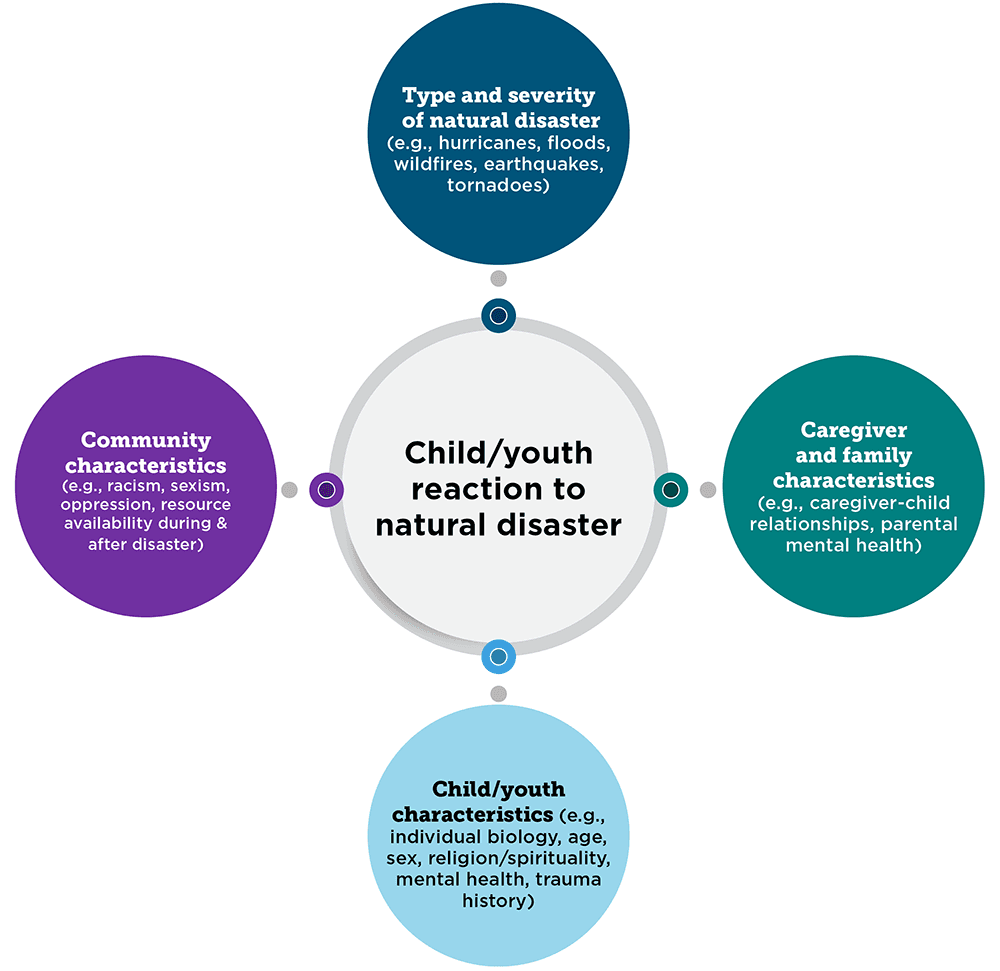
Adapted from: Lai, B. S., & La Greca, A. (2020). Understanding the impacts of natural disasters on children. Washington, D.C.: Society for Research in Child Development. https://www.srcd.org/sites/default/files/resources/FINAL_SRCDCEB-NaturalDisasters_0.pdf
During natural disasters, conditions can shift rapidly, depending on the nature of the event (e.g., flooding during a hurricane; displacement due to a wildfire) and the local, state, and federal response (e.g., whether there is a formal Disaster Declaration that allows public officials to use emergency resources to protect life, property, and public health). Given the often unpredictable and shifting conditions of natural disasters, frequent and ongoing communication with youth and their caregivers is necessary to assess their well-being and needs as they shift, and to provide appropriate, trauma-informed supports along the way.
Youth are more likely to heal from complex trauma and exhibit resilience in the face of a natural disaster when the environments with which they interact most often are responsive to their specific needs. Juvenile justice settings, child welfare settings, schools, mental health agencies, courts, and other community-based services can increase young people’s chances of resilience by communicating directly with youth and their parents/caregivers about their immediate and longer-term needs.
Juvenile justice settings, child welfare agencies, schools, mental health agencies, courts, and other community-based services can increase young people’s chances of resilience to the combined effects of adversity, trauma, and natural disasters by continually communicating with youth and their caregivers about their immediate and long-term needs.
Because each youth and family has their own strengths and needs during an natural disaster, which will require probation/parole officers and other front-line staff to maintain frequent contact with them to assess their status using approaches that are feasible at that time, such as conducting visits virtually for youth living in the community. Research and practice show that talking to youth and their parents/caregivers about specific areas of strength and need are especially useful for promoting healing and resilience.
Juvenile justice settings, child welfare agencies, schools, mental health agencies, courts, and other community-based services can increase young people’s chances of resilience to the combined effects of adversity, trauma, and natural disasters by continually communicating with youth and their caregivers about their immediate and long-term needs.
To determine key areas of need for system-involved youth who experience a natural disaster, Child Trends engaged in several research-based activities to better understand the perspectives of youth, juvenile justice administrators, and the scientific literature (for further information on the methods used, see Introduction). Interviews were conducted with adults over age 18 who were involved in juvenile justice and/or child welfare as youth during different types of natural disasters (Anchorage, Alaska; Santa Barbara, California; Baton Rouge, Louisiana; and Puerto Rico). Key needs identified by youth during these focus groups and interviews are shown in this figure and detailed below.
Four needs identified by system-involved youth, during and after a natural disaster
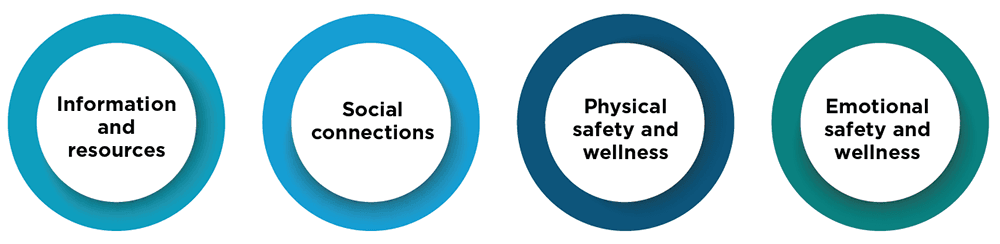
Information and resources
First, youth need sufficient information and resources. Youth wanted more information about the natural disaster, what to expect, and anticipated impacts on their lives. They wanted more consistent communication about the event delivered calmly by adults in charge of their care. Youth reported that not being provided adequate information about the event and its consequences, as well as exposure to staff who were stressed and overwhelmed, increased their anxieties and worries. Overall, youth wanted more structure and support from the adults in their environment for them to manage their own stress and feelings.
"More information about what is happening would help a lot. It’s a lot scarier when you don’t know what’s going on. Everyone’s freaking out about it, but you don’t know what they’re freaking out about. I was confused. Why are you running and dragging me along? I’m , and I remember every single part that happened.”
-Youth formerly involved in juvenile justice and/or child welfare
Social connections
“Communication was a big issue because I felt they were cutting off a lot of our communication by taking our phones. For those who have family or a support system outside, who needed to stay in contact when they’re feeling down or low or going through something, that probably was one of the biggest issues.”
-Youth formerly involved in juvenile justice and/or child welfare
Youth reported feeling socially isolated and stated a clear desire to have stronger social connections during a natural disaster. For example, they wished they had more regular contact with supportive family members and adults, including biological, kinship, and foster family members. This was especially important during times that the natural disaster imposed barriers that made it difficult to locate and reach loved ones. In some instances, separation from social connections occurred because youth or family members were displaced from their community. In other cases, in-person visits and contact with staff were reduced or limited. And in still other cases, individual family members and friends lacked access to the equipment necessary to allow for virtual visits when in-person visits were limited or not allowed. Several cross-over youth in community supervision also wanted more intensive formal supports from a caseworker. For example, some youth recalled that check-ins with a caseworker did not occur regularly during a natural disaster, a period of time when they desired more frequent contact.
Physical safety and well-being
“Before I left , they made sure everyone was safe. They bolted the pictures and stuff on the walls so it wouldn’t fall off. But when I transitioned to a foster home, they didn’t do that.”
-Youth formerly involved in juvenile justice and/or child welfare
Youth reported concerns about physical safety of their residences, buildings, and classrooms in the immediate aftermath of a natural disaster, particularly after earthquakes, where aftershocks may continue for days or weeks after the initial quake. Youth reported differences in safety measures between residential or congregate housing and private foster homes, which impact youth’s feelings of physical safety when transitioning between homes.
Emotional safety and well-being
Youth shared different experiences with receiving support for their emotional safety and wellness during and after a natural disaster. Few youth received support from formal services, such as a mental health provider or counselor. Some youth living in the community relied on informal sources of support from foster siblings, case managers, or foster parents, but there was inconsistency in the supports they received. Some youth who were experiencing acute stress symptoms were dismissed or encouraged to move on without giving adequate time and space to process the events and provide reassurance. When consistent, nurturing supports were available, however, they were extremely important and helpful to the emotional safety and wellness of system-involved youth during a natural disaster.
“Just having people you think are supposed to be there for you, contact you. It would be reassuring that they cared, and that would help us out emotionally. Like you’re not alone, you know? Just to show us there are people out there to tell us we’ll be okay. I think that would be very helpful.”
-Youth formerly involved in juvenile justice and/or child welfare
Everyone in a juvenile justice agency and system has a role to play in promoting healing and resilience among youth after a natural disaster. Resilience and recovery are common, and the chances increase when children and youth have the right supports in place. For example, 2-3 years after Hurricane Katrina, over 72 percent of children exhibited signs of positive development after exposure to a natural disaster.
Protective factors are characteristics of an individual, family, or broader environment that are associated with resilience. Resilience is not an individual trait that one does or does not have, but rather a process of positive adaptation to adversity. Protective factors increase the chances of resilience in the face of hardships, as opposed to risk factors, which are associated with negative outcomes of exposure to adversity (see table below). Respect for one’s racial, ethnic, and gender identity, as well as sexual orientation, is also essential to resilience among young people, as is respect for their voice and choice about what happens to them during and after a natural disaster.140 For youth involved in juvenile justice who may already experience fewer protective factors at home, school, and in the community, promoting and enhancing these factors is essential to healing.
Psychosocial Protective Factors at the Individual, Family, School, and Community Level
Individual children or youth
Family
School
Community
Nurturing and sensitive caregivers
Nurturing by family, care of vulnerable members
Nurturing by school community, disability services
Social capital, care of vulnerable members
Close relationships, trust, belonging
Close relationships, trust, belonging, cohesion
Close relationships, trust, belonging, cohesion
Social connections, trust, belonging, cohesion
Self-regulation, executive function skills
Skilled family management
Skilled school leadership
Skilled governance, collective efficacy
Agency; active coping
Active coping
Active coping
Community action
Problem-solving and planning
Family problem-solving and planning
School problem-solving and planning
Collaborative community problem-solving, planning
Hope, optimism
Hope, optimism
Hope, optimism
Hope, optimism
Sense of individual meaning and purpose
Sense of family meaning, purpose, family coherence
Sense of school meaning, purpose, and coherence
Sense of community meaning, purpose, and coherence
Positive views of self, self-efficacy
Positive views of family
Positive views of school
Positive views of community
Positive habits, routines
Family routines, traditions, celebrations
School routines, traditions, celebrations
Community routines, traditions, celebrations
Bodily/biological resources (e.g., good health, regulation)
Material resources (e.g., clothing, food, shelter, safety)
Community resources (e.g., clean water, safety, health, mental health care)
Cultural and religious guidance, rituals, traditions, belonging, hope, meaning, and purpose
Source: Adapted from Masten, A. S., & Motti-Stefanidi, F. (2020). Multisystem resilience for children and youth in disaster: Reflections in the context of COVID-19. Adversity and Resilience Science, 1, 95-106.Source: Adapted from Masten, A. S., & Motti-Stefanidi, F. (2020). Multisystem resilience for children and youth in disaster: Reflections in the context of COVID-19. Adversity and Resilience Science, 1, 95-106.in disaster: Reflections in the context of COVID-19. Adversity and Resilience Science, 1, 95-106.
“I think it is a culture shift. And the more it's built-in and integrated into the everyday practices, the more it's just going to be natural to effectively respond to a traumatic event, whether it's an individual event or more a widespread pandemic.”
-State administrator
Implementing TIC in juvenile justice agencies means that all staff and administrators understand the impact of trauma, are knowledgeable about the most effective pathways for healing and resilience and have the knowledge and skills to meet the specific needs of all youth. Research suggests that juvenile justice agencies can help youth health and thrive by using TIC. The National Child Traumatic Stress Network (NCTSN) and colleagues have defined a trauma-informed child and family service system as:
“… one in which all parties involved recognize and respond to the impact of traumatic stress on those who have contact with the system including children, caregivers, and service providers. Programs and agencies within such a system infuse and sustain trauma awareness, knowledge, and skills into their organizational cultures, practices, and policies. They act in collaboration with all those who are involved with the child, using the best available science, to maximize physical and psychological safety, facilitate the recovery of the child and family, and support their ability to thrive.”
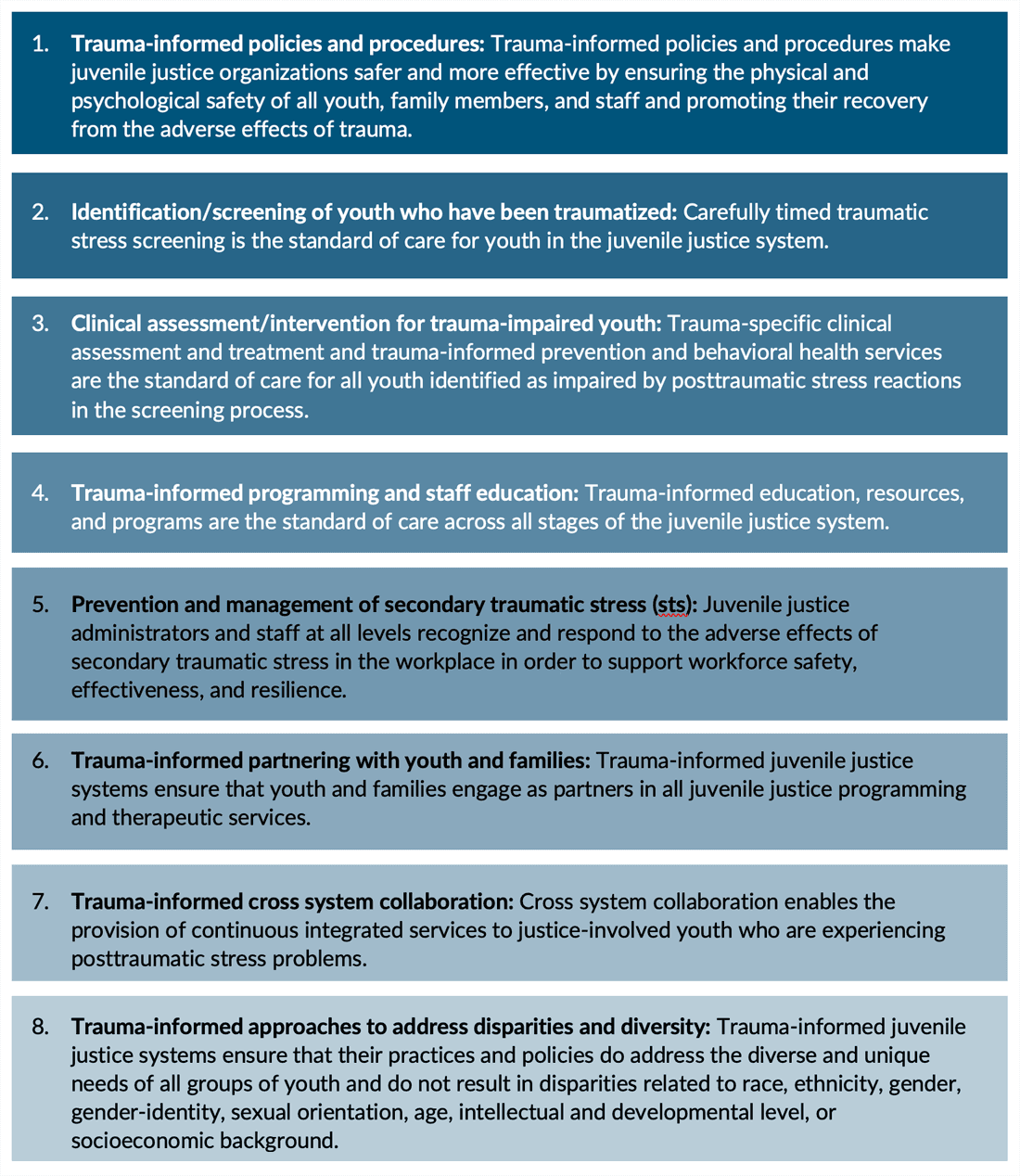
The NCTSN and partners also identified eight essential elements of a trauma-informed juvenile justice system. These same elements can be applied to other youth service settings seeking to understand and address childhood trauma, such as child welfare, education, and mental health, among others.
8 Essential Elements of a Trauma-Informed Juvenile Justice System
Source: Adapted from Masten, A. S., & Motti-Stefanidi, F. (2020). Multisystem resilience for children and youth in disaster: Reflections in the context of COVID-19. Adversity and Resilience Science, 1, 95-106.
There is no single approach to trauma-informed care. JJ agencies can use the information above—particularly the 4 Rs, the Eight Essential Elements, the four needs identified by youth formerly involved in the juvenile justice and/or child welfare system, and the tools in this Toolkit—to develop a plan to address trauma using a comprehensive, systemic approach. The evidence strongly suggests that offering ongoing professional development on trauma, healing, and resilience to both agency leaders and staff, as well as using evidence-informed interventions to address childhood trauma related to natural disasters, will enhance agency efforts to support youth and families who have been exposed to a natural disaster. Sections 1 and 3 provide information on overall recommendations and interventions for state, county, tribal, and territory juvenile justice system to prevent and mitigate disaster-related trauma.
Additional tools for partnering with children, youth, and families to promote their well-being before, during, and after a natural disaster in Section 2 include the Resource Library and Evidence-at-a-Glance. Section 3 of the Toolkit describes evidence-informed interventions for incorporating trauma-informed care (TIC) into state, county, tribal, and territory child welfare systems to prevent and mitigate disaster-related trauma.
Put It Into Practice
4. Organizational Self-Assessment: How Trauma-Informed is Your Agency, Organization, or System (PDF)
For use BEFORE a natural disaster occurs
Juvenile Justice Resource Library 2: Trauma, Healing, and Resilience After Natural Disasters and Pandemics
Adverse Childhood Experiences (ACEs) Centers for Disease Control and Prevention
Age-related Reactions to a Traumatic Event (Caregiver Resource) National Child Traumatic Stress Network
Essential Elements of a Trauma-Informed Juvenile Justice System National Child Traumatic Stress Network
Human Rights Campaign. Working with the LGBT community: A cultural competence guide for emergency responders and volunteers Human Rights Campaign
Trauma-Informed Strategies for Supporting Youth in the Juvenile Justice System during COVID-19 Child Trends
Resources for Supporting Children’s Emotional Well-being During the COVID-19 Pandemic Child Trends, 2020
Research Roundup: Traumatic Events and the LGBTQ Community American Psychological Association
SAMHSA’s Concept of Trauma and Guidance for a Trauma-Informed Approach Substance Abuse and Mental Health Services Administration
Understanding the Impacts of Natural Disasters on Children Society for Research on Child Development
What is a Trauma-informed Child and Family Service System? National Child Traumatic Stress Network
Section 3
Interventions to Support Healing and Resilience Among Youth and Families Who Experience a Natural Disaster

There are several evidence-informed, trauma-focused models and interventions to support youth who have experienced natural disasters and promote healing. Many of these models and interventions share core components, and thus have considerable overlap with one another in their content and approach. Some models have been used specifically with youth involved in juvenile justice. Models may vary in the timing of implementation—some are used during or immediately after the natural disaster, others are used in the intermediate or long-term.
When choosing which models and interventions to use, it is important to consider whether the model or intervention:
- Targets the goals or outcomes valued by children, youth, and families (e.g., providing immediate relief and referral to basic resources, reducing posttraumatic stress and other distress reactions).
- Can be realistically implemented given the specific child, youth, family, agency, and community context, including local resources available, and following federal, state, and county policies.
- Is appropriate for the age, race, ethnicity, gender identity, and sexual orientation of children, youth, and their families and their cultural and historical context (e.g., living in a foster home or group home, history of complex or historical trauma, cultural background).
The good news is that most youth show signs of resilience after exposure to natural disasters and return to normal functioning without receiving formal intervention—including those receiving juvenile justice services. For a smaller number of youth, clinical services are needed, specifically youth who experience significant mental health and behavioral problems that are best addressed through formal trauma- and grief-focused treatment with a mental health provider. Formal treatment is more likely to be needed following severe exposures, secondary adversities (e.g., severe injury/illness, other trauma and losses, housing instability), and pre-existing or co-occurring risk factors (e.g., prior trauma or mental health conditions). Making decisions about the appropriate level of support, services, and interventions following a natural disaster should follow a tiered approach, tailoring the intensity of the intervention to the needs of each child, youth, and family.
In the response phase of a natural disaster, it is recommended to begin with a needs assessment of children, youth, and their families to determine the extent of potential exposures to trauma and loss, identify co-occurring adversities and strengths, and differentiate high-risk groups that may be in need of intensive supports. Needs assessments can be conducted in a variety of settings (e.g., home, school, community, shelter) using a semi-structured format. In addition, using a formal screening tool for posttraumatic stress reactions and secondary adversities is also recommended. For sample screening tools for children/youth and adults, see the Section 3 Resource Library.
There are also several psychoeducational materials, hotlines, and apps to help support youth, families, and those working with them:
Psychoeducational Materials
- National Child Traumatic Stress Network
- Substance Abuse and Mental Health Services Administration
- Centers for Disease Control and Prevention
Mobile Apps
Online Course
My Disaster Recovery
Hotlines
- National Suicide Prevention Lifeline, Call (800) 273-8255
- Disaster Distress Helpline, Call or text (800)985-5990 (For Spanish, press “2”) to be connected to a trained counselor 24/7/365
- The JED Foundation (for emotional health and suicide prevention), Call 1-800-273-TALK (8255) or text “START” to 741-741
- Trevor Project (for LGBTQ+ youth), Call 1-866-488-7386 or text “START” to 678-678
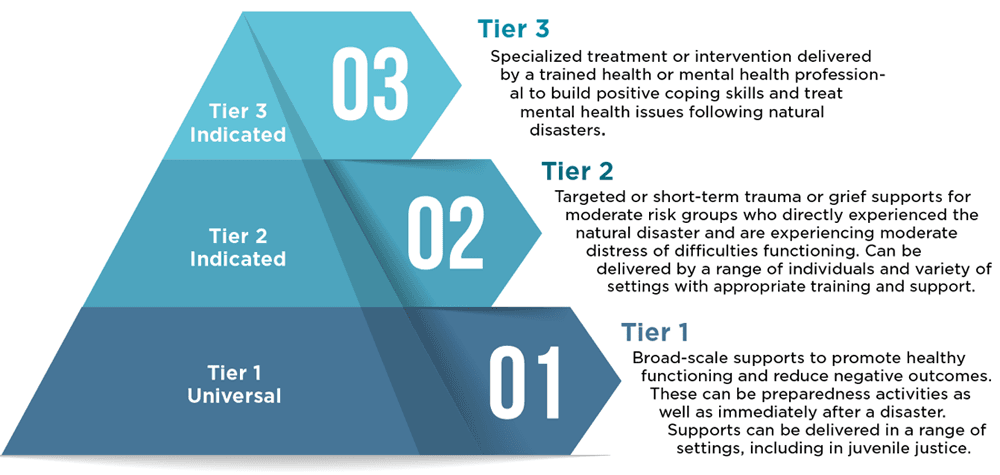
There are several evidence-informed universal and targeted interventions (see figure below, Tiers 1 and 2) designed for preventing or reducing stress reactions and increasing positive supports among youth after a natural disaster. These models can be implemented by a range of providers in a variety of settings. It is recommended that staff and administrators in the juvenile justice system should seek training in one or more of these models to be prepared to respond when a natural disaster occurs. These models are not intended to serve as mental health treatments or long-term interventions.
There are also several evidence-informed indicated treatments and interventions (Tier 3) that have been developed and tested for children and youth in the child welfare system who experience trauma. These treatments are designed to be used by licensed mental health professionals with adequate clinical training. Juvenile justice administrators, staff, and judges should be familiar with these evidence-informed treatments when making referrals for children and youth under their care (see figure).
Universal, Targeted, and Indicated Interventions
Source: The National Child Traumatic Stress Network, 2021
Universal and targeted interventions (Tiers 1 and 2)
In recent years, numerous disaster behavioral health interventions for children and youth have been developed and evaluated. Although few have evaluated interventions specifically for children and youth receiving juvenile justice services, several evidence-informed universal and targeted models have been widely implemented in a variety of settings impacted by natural disasters. The table below provides intervention names, descriptions, and evidence to date for three of the most promising Tier 1 and 2 interventions that are appropriate for service systems that work with children and youth of any age. These interventions can be used independently or in combination to meet the needs of a particular youth or family in the days and weeks following a natural disaster.
Promising Tier 1 and Tier 2 Interventions
Intervention
Target Population(s)
Description
Evidence to date
PREPaRE Curriculum
(Brock et al., 2016)
School-employed mental health professionals, administrators, educators, and staff
The PREPaRE Curriculum was developed by the National Association of School Psychologists (NASP) as a crisis prevention and preparedness training curriculum for school implementation. The program consists of two workshops covering school-wide safety planning and a workshop for school mental health professionals focused specifically on crisis intervention and recovery.
Learn more about PREPaRE, including training opportunities at: https://www.nasponline.org/professional-development/prepare-training-curriculum/about-prepare
Results from pre-post training evaluations indicate that PREPaRE improves knowledge of trauma-informed practices among those trained. There is not yet any evidence confirming that this training translates to better child outcomes in the face of a trauma, which is more challenging to study in the midst of disasters and crises.
Psychological First Aid (PFA)
(Brymer et al., 2006)
Mental health and other disaster response workers who provide early assistance to affected children, youth, families, and adults as part of an organized disaster response effort. These providers may be embedded in a variety of settings, including clinics, schools, shelters, faith-based organizations, or community agencies.
Psychological First Aid (PFA) is a modular approach informed by empirical evidence on trauma-informed care to support youth, adults, and families in the immediate aftermath of disaster (i.e., within days to weeks of the event). The most comprehensive PFA guide was developed by the National Child Traumatic Stress Network and the National Center for PTSD. PFA is designed to address acute distress reactions and bolster longer-term adaptive functioning and coping. The delivery of PFA is designed for maximum flexibility to meet the needs of acute crisis settings, including intervention contact time, provider background (e.g., mental health, education, community programming), and delivery location (e.g., community center, home, school, child welfare facility). PFA has been translated into several languages and has been adapted for a range of settings. PFA has been adopted and recommended by a range of mental health experts in consensus conferences and peer-reviewed literature. It has also been included in service guidelines both for PTSD and as an early intervention for disaster survivors by the American Academy of Child and Adolescent Psychiatry and other international organizations.
Learn more about PFA, including training opportunities at: https://www.nctsn.org/treatments-and-practices/psychological-first-aid-and-skills-for-psychological-recovery/about-pfa
PFA has widespread use and anchoring in empirically supported, trauma-informed, and cognitive-behavioral components of trauma-focused interventions and is supported by the American Academy of Child and Adolescent Psychiatry disaster parameter. Pre-post training evaluations of PFA have shown promising results for trainees, with statistically significant improvements in (a) knowledge items supportive of PFA delivery, (b) perceived self-efficacy to apply PFA interventions, and (c) confidence about being a resilient PFA provider. These evaluations have also shown decreased PTSD and depressive symptoms among youth treated by these trainees 10 months following the disaster.
Skills for Psychological Recovery (SPR)
(Berkowitz et al., 2010)
Mental health and other health workers (ideally with some prior experience in addressing traumatic stress or disasters) who provide ongoing support and assistance to affected children, youth, families, and adults as part of an organized disaster response effort. These providers may be embedded in a variety of settings, including clinics, schools, shelters, faith-based organizations, or community agencies.
Skills for Psychological Recovery (SPR) may serve as a stand-alone intervention or an extension of PFA. It was developed for the intermediate recovery phase by the National Child Traumatic Stress Network and National Center for PTSD. SPR aims to build stress management and coping skills among youth, adults, and families in the weeks and months following a disaster or other traumatic event. SPR is not a formal mental health treatment. Rather, SPR is a framework for training adults in skills-based, secondary prevention. SPR can be delivered in a variety of settings, such as schools, clinics, homes, child welfare facilities, and community centers.
Learn more about SPR, including training opportunities at: https://www.nctsn.org/treatments-and-practices/psychological-first-aid-and-skills-for-psychological-recovery/about-spr
In pre-post training evaluations, practitioners reported improved confidence in using each SPR intervention following training and at 6 months post-training. Based on available data, more than 6 out of 10 practitioners used an SPR intervention during the follow-up period, with each intervention used by over half of the practitioners at both 3 and 6 months. In an evaluation of SPR in Louisiana, approximately 80% of children and youth screened were referred to SPR, and among those who completed follow-up assessments, there was a significant reduction in behavioral and emotional symptoms over time after receiving services. Although children and youth receiving child welfare services were not a sub-population of focus in this study, they were served by the program. Specifically, 68% of children and youth were displaced from their homes and 25% had lived apart from their primary parent/caregiver during or after the disaster happened, with 10% being separated long-term.
Source: The California Evidence-Based Clearinghouse for Child Welfare. (n.d.). Welcome to the CEBC: California Evidence-Based Clearinghouse for Child Welfare. The California Department of Social Services Office of Child Abuse Prevention. https://www.cebc4cw.org/
Indicated interventions for natural disasters (Tier 3)
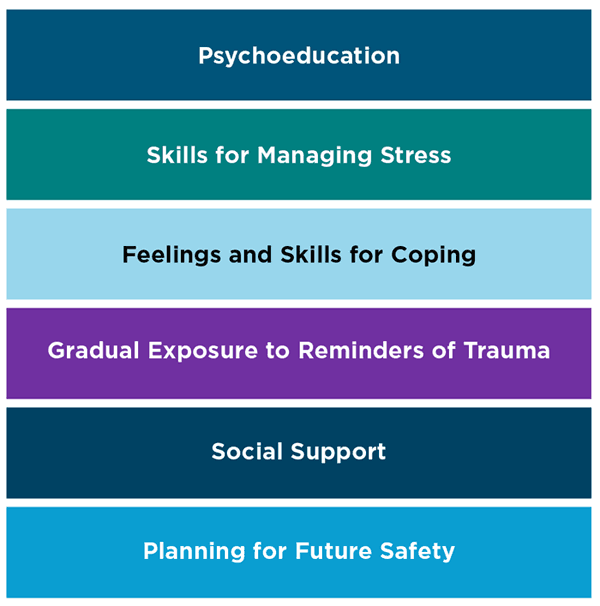
There are a variety of formal disaster behavioral health interventions for youth identified in the literature. In general, cognitive behavioral approaches have the strongest evidence in rigorous studies that compare outcomes for those who received mental health intervention compared to those who did not. There is some evidence that group interventions may be equally effective as individual interventions and with better rates of completion, but group treatments also require careful examination of the pros and cons of discussing trauma-related content in a group setting with peers. The figure below shows common elements of Tier 3 (indicated) trauma- and evidence-informed interventions.
Common Components of Indicated (Tier 3) Evidence- and Trauma-informed Interventions for Children and Youth Who Experience a Natural Disaster
Source: Adapted from Pfefferbaum, B., & North, C. S. (2016). Child disaster mental health services: A review of the system of care, assessment approaches, and evidence base for intervention. Current Psychiatry Reports, 18(1), 5. doi:10.1007/s11920-015-0647-0
The California Evidence-Based Clearinghouse for Child Welfare indexes trauma-focused interventions for reducing trauma-related symptoms among children and adolescents. Interventions are categorized in three levels: well-supported, supported, or promising. Categorization is based on implementation considerations (existence of a manual), methodological considerations (published randomized controlled trials, reliable outcome measures, and follow-up data collection), and evidence of positive outcomes. The Blueprints for Healthy Youth Development is another registry of evidence-based and promising interventions focused on promoting healthy youth development.
For cross-over youth involved in both child welfare and juvenile justice, a unique feature of the Clearinghouse is that it also rates intervention applicability to child welfare (CW) populations as High (designed or commonly used to meet the needs of children and youth receiving child welfare services), Medium (designed or commonly used to serve children and youth who are similar to child welfare populations in history, demographics, or needs), or Low (designed, or commonly used to serve children and youth with little or no apparent similarity to the child welfare services population). A similar relevance rating is not available for juvenile justice populations, although several treatment models have been tested in randomized trails and are presented below. Some models have been used and evaluated specifically for natural disasters, though evidence of effectiveness for natural disasters is scarce.
The table below identifies Tier 3 trauma-focused interventions (as categorized by the Clearinghouse) with the strongest evidence of effectiveness. The table includes information on each intervention’s relevance to child welfare and published findings related to natural disasters. Parents and other caregivers should be included in the intervention whenever possible. It is important to note that although some trauma-focused interventions may not have published findings specific to natural disasters, they may still have evidence for addressing trauma-related symptoms among children and youth generally and may have included disaster-exposed youth in their testing.
Trauma-focused interventions for youth Age >10 and their families with evidence ratings for child welfare and published findings on natural disasters
Level of Evidence
Intervention
CW Relevance
Published Findings
on Natural Disasters
Age (years)
Well-Supported
Trauma-Focused Cognitive Behavioral Therapy
High
Yes
3-18
Well-Supported
Eye Movement Desensitization and Reprocessing
Medium
Yes
4-18
Well-Supported
Prolonged Exposure Therapy for Adolescents
Medium
No
8-18
Promising
Alternatives for Families: A Cognitive Behavioral Therapy
High
No
5-17
Promising
Child and Family Traumatic Stress Intervention
High
No
7-18
Promising
Combined Parent-Child Cognitive-Behavioral Therapy
High
No
3-17
Promising
Stepped Care TF-CBT
High
No
3-12
Promising
Bounce Back
Medium
Yes
5-11
Promising
Cognitive Behavioral Intervention for Trauma in Schools
Medium
Yes
10-18
Promising
KIDNET
Medium
Yes
7-16
Promising
Cue-Centered Therapy
Medium
No
8-17
Promising
Fairy Tale Model
Medium
No
13-18
Promising
Grief and Trauma Intervention for Children
Medium
No
7-12
Promising
Risk Reduction through Family Therapy
Medium
No
13-18
Promising
Sanctuary Model (Systems Level Intervention)
Medium
No
12-20
Promising
Seeking Safety
Medium
No
13+
Promising
SITCAP-ART
Medium
No
13-18
Promising
Trauma-Focused Coping
Medium
No
9-18
While a similar rating system does not exist for youth who are involved in the juvenile justice system, there are four evidence-based interventions that have published findings in at least one randomized trial with youth involved in juvenile justice (Table below). Two of these models also appear in the Clearinghouse for child welfare.
Trauma-focused interventions for youth involved in juvenile justice, with evidence ratings for child welfare and published findings on natural disasters
Level of Evidence
Intervention
CW Relevance
Published Findings
on Natural Disasters
Age (years)
Well-Supported
Treatment Foster Care Oregon for Adolescents (formerly Trauma-Adapted Multidimensional Treatment Foster Care)
High
No
12-18
Well-Supported
Cognitive Processing Therapy
Medium
Yes
14+
Promising
Trauma-Grief Components Therapy for Adolescents
Medium
Yes
12-20
Promising
Trauma Affect Regulation: Guide for Education and Therapy for Adolescents
Medium
No
10-18
Source: The California Evidence-Based Clearinghouse for Child Welfare. (n.d.). Welcome to the CEBC: California Evidence-Based Clearinghouse for Child Welfare. The California Department of Social Services Office of Child Abuse Prevention. https://www.cebc4cw.org/
Juvenile Justice Resource Library 3: Interventions to Support Healing and Resilience AFTER Natural Disasters
Blueprints for Healthy Youth DevelopmentCalifornia Evidence-Based Clearinghouse for Child Welfare Rady’s Children’s Hospital San Diego, California Department of Social Services, & Office of Child Abuse PreventionCulture and Trauma National Child Traumatic Stress NetworkPsychological First Aid: Field Operations Guide (2nd ed.) National Center for PTSD and National Child Traumatic Stress NetworkPREPaRE National Association of School PsychologistsSAMHSA Disaster Technical Assistance Center Supplemental Research Bulletin: Disaster Behavioral Health Interventions Inventory Substance Abuse and Mental Health Services AdministrationSAMHSA Child/Youth Assessment and Referral Tool Substance Abuse and Mental Health Services AdministrationSAMHSA Adult Assessment and Referral Tool Substance Abuse and Mental Health Services AdministrationSkills for Psychological Recovery (SPR) Field Operations Guide National Center for PTSD and National Child Traumatic Stress Network, 2020Title IV-E Prevention Services Clearinghouse Abt AssociatesThink Trauma: A Training for Working with Justice Involved Youth, 2nd Edition National Child Traumatic Stress NetworkTrauma-informed Strategies for Supporting Children and Youth in the Juvenile Justice System During COVID-19 Child TrendsTreatment for Traumatized Children, Youth, and Families Child Welfare Information Gateway
Psychoeducational Materials
- National Child Traumatic Stress Network
- Substance Abuse and Mental Health Services Administration
- Centers for Disease Control and Prevention
Mobile Apps
Online CourseMy Disaster RecoveryHotlines
- National Suicide Prevention Lifeline, Call (800) 273-8255
- Disaster Distress Helpline, Call or text (800)985-5990 (For Spanish, press “2”) to be connected to a trained counselor 24/7/365
- The JED Foundation (for emotional health and suicide prevention), Call 1-800-273-TALK (8255) or text “START” to 741-741
- Trevor Project (for LGBTQ+ youth), Call 1-866-488-7386 or text “START” to 678-678
Disclaimer
This research was supported by the Annie E. Casey Foundation. The findings, conclusions, and recommendations presented in this toolkit are those of the authors alone, and do not necessarily reflect the opinions of the Foundation.
Established by Congress in 2000, the National Child Traumatic Stress Network (NCTSN) brings a singular and comprehensive focus to childhood trauma. NCTSN’s collaboration of frontline providers, researchers, and families is committed to raising the standard of care while increasing access to services. Combining knowledge of child development, expertise in the full range of child traumatic experiences, and dedication to evidence-based practices, the NCTSN changes the course of children’s lives by changing the course of their care.
Acknowledgements
The project team is grateful for the support of the Annie E. Casey Foundation, with special appreciation for Mildred Johnson’s guidance throughout the project. We also want to express our deep gratitude to the youth who participated in this project and contributed their lived expertise with natural disasters and involvement in the child welfare and/or juvenile justice systems. Similarly, we thank the child welfare and juvenile justice administrators and direct service staff who contributed their valuable insights to the toolkit. In addition, we thank our Senior Advisors, Melissa Brymer, Ellen Kahn, Joy Osofsky, and Isaiah Pickens, and the members of our Advisory Board, Marcos Santana Andújar, Toni Buxton, Melissa Brymer, Shannon Catanzaro, Nicolette Louissaint, Deborah Northburg, Joy Osofsky, Julie Segovia, and Gail Wasserman. Finally, we extend our thanks to our Child Trends colleagues, whose support was invaluable to the toolkit’s development: Deana Around Him, Bianca Faccio, Isabel Griffith, Esther Gross, Cassidy Guros, Alison McClay, Maria Ramos-Olazagasti, Dana Thomson, Alicia Torres, and Kara Ulmen.