




Lessons Learned From the 2026 Syphilis Solutions Summit: Pregnancy-to-Neonatal Screening and Treatment
The 2026 Syphilis Solutions Summit, hosted by Child Trends’ New Insights in Sexual Health (NISH) team, focused on expanding screening and treatment across the pregnancy-to-neonatal care continuum. The event spotlighted some of the strategies states and local communities are using to ensure that no pregnant patient or newborn falls through the cracks.
We were excited to feature the following guest speakers:
- Dr. Debra Bogen, Pennsylvania secretary of health, discussed the role of state health leaders in prioritizing congenital syphilis efforts and shared ongoing efforts in Pennsylvania.
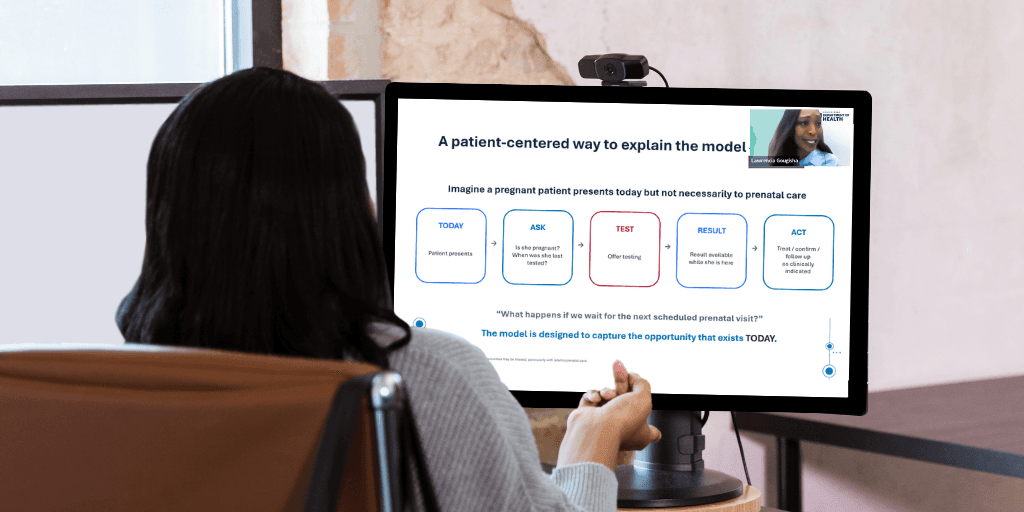
- Lawrencia Gougisha, statewide nurse educator at the Louisiana Health STD/HIV/Hepatitis Program, highlighted the development of Louisiana’s expanded point-of-care testing model.
- Anne Statton, executive director of the Mother and Child Alliance, shared congenital syphilis efforts in northeastern Illinois and how that work is integrated with Fetal Infant Mortality Review processes.
Watch the Recording
The webinar recording is free and available for maternal and child health professionals, community health workers, and anyone committed to protecting the health of parents, families, and babies. Whether you are experienced in sexually transmitted infection (STI) prevention or just getting started, this session offers thoughtful approaches and actionable strategies to strengthen your community’s response to syphilis and congenital syphilis.
The webinar highlighted several resources:
- Healthy Moms, Vibrant Future (Maternal Health Strategic Action Plan)
- Louisiana Health STD/HIV/Hepatitis Program
- Mother and Child Alliance
- State Prenatal Syphilis Screenings Laws and Regulations
- STI Statistics the Centers for Disease Control and Prevention (CDC)
- County-level Syphilis Data
Stay informed about new resources, free virtual trainings, meetings, and more by joining NISH's mailing list. To learn more about specific efforts in your state or community—or to share additional suggestions—email us at nish@childtrends.org.
Additional Resources
Want to make a real impact in your community? Explore NISH’s project page for practical resources, including the following:
- Syphilis and Congenital Syphilis Resource List: Numerous practical resources, including general information about syphilis and congenital syphilis, tools for clinicians, and resources for community outreach and awareness (including for those outside of the health care and public health fields).
- Watch 2025’s Syphilis Solutions Summit: This event spotlighted an innovative, statewide approach from Mallory Jayroe, infectious disease epidemiology section chief and SET-NET coordinator from the Arkansas Department of Health. Participants gained practical strategies to help reduce syphilis and congenital syphilis in their communities.
You also can explore resources from the Centers for Disease Control and Prevention and its partners:
- Syphilis Tools (National STD Curriculum): A free app that health care providers can use as a clinical reference for syphilis screening, testing, and treatment, including interactive tools to interpret serologic tests and identify syphilis stages
- Syphilis Video Series (National Network of STI Clinical Prevention Training Centers): A set of videos that provide basic information about syphilis, how it is clinically assessed, how to manage staging and treatment, and how to support partners
- Point-of-Care Testing for Sexually Transmitted Infections Toolkit (National Association of County & City Health Officials and The Policy Innovation Exchange for HIV, Viral Hepatitis, STD, and TB Prevention): A guide for public health officials that defines point-of-care testing (POCT); its benefits and limitations; and how to implement a POCT program, including understanding regulations around point-of-care tests
- Considerations for the Implementation of Point of Care (POC) Tests for Syphilis (National Syphilis and Congenital Syphilis Syndemic Federal Task Force): Guidance describing the specifics of available point-of-care tests for syphilis, what unique features to consider for these types of programs, and deciding whether a POCT program is right for your community
- Syphilis and Congenital Syphilis Resource Lists (Centers for Disease Control and Prevention): A collated list of resources on syphilis and congenital syphilis for 1) general audiences and 2) specifically for perinatal care clinicians
Frequently Asked Questions
Attendees asked insightful questions throughout the Summit. This section compiles answers from our experts to these questions, which have been lightly edited for clarity.
Q: How many congenital syphilis cases do each of your states have?
A: A detailed resource of national and state-level STI data, including trends in syphilis and congenital syphilis rates, can be found on CDC’s webpage. Additionally, CDC’s AtlasPlus is an interactive tool that provides detailed data and visualizations on STIs, including syphilis rates. CDC’s surveillance data typically has about a one-year lag before being finalized in AtlasPlus; check the tool directly for the most current release.
Q: What does your organization do when the provider will not run the Treponema Pallidum Particle Agglutination (TPPA) test because the Rapid Plasma Reagin (RPR) test is nonreactive?
A: Treponemal tests (e.g., TPPA) should be used in patients with signs suggestive of syphilis in early primary infection when nontreponemal tests (e.g., RPR) might not yet be reactive. If you have a patient in this situation, refer the clinician to the CDC Laboratory Recommendations for Syphilis Testing, United States, 2024, which describes these key differences and can help you make your case for TPPA testing.
Q: Do you treat positive rapid syphilis tests on the same visit without a confirmatory syphilis test?
A: Yes. Same-day presumptive treatment based on a reactive rapid/POC test, without waiting for confirmatory lab results, is standard current guidance, particularly for pregnant patients, patients with signs/symptoms of primary or secondary syphilis, patients with a known sexual contact diagnosed with syphilis, and patients at high risk of being lost to follow-up (e.g., emergency department patients, unstable housing). The rationale is straightforward risk-benefit: the harm of delaying treatment—especially the risk of congenital syphilis—outweighs the harm of occasionally treating a false positive. Confirmatory testing and follow-up titers are still collected to verify the diagnosis and monitor treatment response; they just don't hold up the initial dose.
Q: Is the POC test specific with a titer, or does it just show that the test is reactive?
A: The currently available point-of-care tests in the United States only detect treponemal antibodies, so they give a reactive/nonreactive result, not a titer.
Q: Regarding the Pennsylvania recommendation for repeat testing at delivery for all pregnant patients, how do you measure compliance with this? Did you have any concerns that CDC had not yet made that recommendation? Were there any issues with workflow at delivery hospitals who don't do this testing on site (waiting on test results interrupting discharge timelines, etc.). I am involved in conversations in Illinois about universal repeat testing at delivery and these questions have arisen in our discussions.
A: This is a CDC, United States Preventive Services Task Force (USPSTF), and American College of Obstetricians and Gynecologists (ACOG) recommendation. Pennsylvania adopted this as syphilis began to rise in women of reproductive age; subsequently, congenital syphilis began to rise as well. The recommendation has been in place for communities with higher syphilis morbidity; however, with the increase in syphilis the recommendation became universal. The state’s field staff have carried the message and education. They have given grand rounds to promote testing at all three intervals, and have had cases where the patient had prenatal care and testing during the pregnancy and the mother tested positive for syphilis at delivery. The Pennsylvania Department of Health has not heard of issues related to results and workflow. However, in Pennsylvania, field staff follow up on all positive cases of syphilis to assure treatment and provide partner services.
In Illinois, the Mother and Child Alliance measures testing at delivery for two populations: persons with no documented prenatal screening for syphilis and persons with no documented third trimester testing for syphilis. In those two cases, they are asking hospitals to test at delivery and report to us if they had reactive results (but not confirmed results). In Chicago, the Chicago Department of Health sent out a Health Alert through their network to recommend a third test at delivery for every Chicago hospital. Currently, all Chicago hospitals are also doing a third test (everyone else) at delivery and parsing out the data that they report monthly to the Maternal and Child Alliance on who got a test because of no testing or because of no third trimester test.
Q: Is an opt-out emergency department (ED) screening intervention in place at your hospitals? I am looking to implement this in Maryland, and I’m searching who has done it successfully and well.
A: During the summit, participants shared examples of successful opt-out STI/syphilis screening in emergency departments. The University of Chicago Hospital has implemented emergency department testing, and programs in Texas—including work led by Dr. Irene Stafford—have also explored opt-out screening approaches. Participants recommended looking to these programs for examples of implementation and lessons learned when considering similar approaches in other jurisdictions.
In addition to programs shared by Summit participants, others have worked on engaging emergency departments in screening, such as the California Department of Public Health. Recently, the Emergency Medicine Transmissible Infectious Diseases and Epidemics consortium, with support from the CDC and the National Association of County and City Health Officials, hosted a convening of multidisciplinary experts to further discuss this issue.
Q: Why does the Illinois Department of Public Health (IDPH) not mandate syphilis testing at delivery?
A: CDC's guidance still calls for risk-based (not universal) rescreening at delivery. The American College of Obstetricians & Gynecologists (ACOG)'s 2024 guidance, however, now recommends universal screening at three points, including delivery, and many states and hospital systems have moved to align with ACOG. IDPH's approach reflects that the federal recommendation hasn't yet caught up to where professional guidelines have moved.
Q: How common is neuro-syphilis? Is there a consistent evidence-based questionnaire to screen for neuro-syphilis?
A: Neurosyphilis is an uncommon but serious complication that can occur at any stage of infection. There isn't a standardized screening questionnaire, but this information from the Michigan Department of Health & Human Services can help. A diagnosis relies on clinical signs/symptoms combined with cerebrospinal fluid (CSF) findings (CSF-VDRL, cell count, protein) per the CDC STI Treatment Guidelines.
Q: At the health department, we sometimes see pregnant mothers whom we have recently screened and treated because their OBGYN conducted a screening shortly (e.g., a month) after their visit with us and the mothers’ titers were still elevated. How should we handle this as a health department?
A: There are a couple of different ways to handle this at the health department. If a clinician is consistently sending back recently screened and treated patients, it might be useful to provide some education to the clinician about syphilis testing recommendations after treatment and/or to have a direct link with the clinician about when you are jointly managing patients. CDC guidelines on this point (under the “Follow-Up” heading) might be useful. Lastly, it can be useful to provide patients with documentation of their syphilis test results, treatment, and management plan so they can hand it to their clinician at the time of their next prenatal care visit—this can also help the patient to self-advocate to avoid unnecessary testing, referrals, and treatment.
Q: What are the recommendations for screening a newborn who was exposed and tested and treated at birth? And what are the next steps for follow-up with the pediatrician?
A: What happens next depends on the infant’s evaluation category at birth. The CDC groups exposed infants into scenarios based on the mother’s treatment history and titers, the infant’s exam, and testing at birth.
Q: What are the syphilis testing recommendations in Pennsylvania? (In Maryland, we test three times: initial appointment, 28-32 weeks, and, as of 10/2024, a third time at labor and delivery.)
A: ACOG recommends universal screening three times during every pregnancy: at the first prenatal visit, during the third trimester, and at delivery. Dr. Bogen shared that Pennsylvania follows the same three-time schedule. The state’s Communicable Disease Act is currently moving through the legislative process to formally reflect this practice.
Q: For clinical staff administering treatment in patient homes as part of the Mother and Child Alliance home syphilis treatment, how is documentation managed? Is an electronic medical record (EMR) used, or is it given in affiliation with a separate clinical organization?
A: For Illinois home-delivered treatment, we make a comprehensive note that is shared back with the provider to become part of the patient record and send a copy to the corresponding public health entity for their record-keeping. The note is sent when all home-delivered doses are complete.
Q: For a pregnant patient at 6 months gestation with nonreactive RPR and positive TPPA who reports no history of syphilis, how should treatment be determined? If there is a possibility of an undocumented prior infection that was partially treated with antibiotics, should the patient be treated as late latent syphilis with three doses of Bicillin, even though she does not meet the case definition for syphilis?
A: This pattern (reactive treponemal test, nonreactive nontreponemal test) is likely consistent with someone using a reverse algorithm. In this case, a second treponemal test should be sent and management based on this test result. This is detailed in the CDC Laboratory Recommendations for Syphilis Testing, United States, 2024.
Q: How should we address testing and treatment of sexual partners—including male partners navigating a partner’s pregnancy—to prevent reinfection? In particular, with the ongoing Bicillin shortage, has anyone piloted patient-delivered treatment with doxycycline for partners of pregnant patients who are unable to access a clinic for evaluation?
A: Doxycycline can be used as part of partner treatment—with an important distinction. During the ongoing Bicillin L-A shortage, CDC recommends jurisdictions “strongly consider preserving benzathine penicillin G (BPG) for treating patients who are pregnant” and to “choose doxycycline for men and non-pregnant women to help preserve BPG supplies.” CDC specifies doxycycline 100 mg orally twice daily for 14 days for early syphilis or 28 days for late latent syphilis or syphilis of unknown duration.
However, this guidance does not specifically endorse patient-delivered doxycycline for partners; it addresses the use of doxycycline as an alternative treatment for men and non-pregnant women. In the CDC STI Treatment Guidelines, the management of partners is addressed under the Management of Sex Partners heading. Importantly, there are some situations where presumptive treatment is appropriate.
Q: When will updated STI data be available on the CDC Atlas tool? It’s still showing 2023 data.
A: The currently available 2024 CDC STI Surveillance data are preliminary. The tool will be updated in AtlasPlus after these data are finalized later this winter.
Q: How do you address follow up and data collection if rapid syphilis testing is done in emergency departments (EDs)?
A: For Illinois, there is not a standard for rapid testing done in the ED—it would depend on the protocol. Positive rapids would need to be confirmed and the confirmed rapids get reported to the health department for follow-up. Whether or not the EDs will treat relates to their protocol or standard recommendations for EDs.
In Pennsylvania, follow-up of testing done in EDs is the responsibility of the health care facility ordering the testing. If there is a positive rapid syphilis test, the facility also needs to do a blood draw to confirm. If the result is reported into the state surveillance system, a team from the Pennsylvania Health Department also follows up.
Q: How do you incorporate billing for POC testing into clinical care? This is an important part of sustainability.
A: POC testing is typically treated as a standard laboratory service, the same as any other diagnostic test, rather than treated as an unfunded public health activity. For a Clinical Laboratory improvement Amendments (CLIA)-waived rapid test, Current Procedural Terminology (CPT) code 86780 is used, billed with the QW modifier to indicate it was performed under a CLIA Certificate of Waiver.
Q: One of the challenges in our system is the limitation of no access to health department records. The onus is then on the provider/practice to obtain treatment records to confirm treatment. Some accept patient reports, which are unfortunately not always accurate. What solutions have others had to improve access to patient treatment records at public health agencies outside of the traditional prenatal care setting?
A: As noted in the presentations, the Mother and Child Alliance serves as the bridge between the health departments and clinical providers via their Perinatal Syphilis Warmline. It may be useful to consider whether there is a community partner that has this existing relationship and can work with health departments to coordinate the delivery of treatment records. The Maternal and Child Alliance is happy to meet with jurisdictions and states that need support to pitch this type of collaboration at the state or local level.
As always, clinicians need to provide patient management based on available information—when in doubt, especially during pregnancy, patients should be treated. To prevent this from happening in the future, it is also useful for all settings to provide patients with copies of their syphilis test results, treatment, and management plan.
Q: Social determinants of health play a large role in driving maternal and congenital syphilis cases (e.g., lack of insurance for prenatal care, homelessness, poverty, and other factors like mental health substance use), especially in rural areas with already limited resources. Are there any specific interventions/policies intended to address these social determinants of health, particularly related to supporting patients with substance use disorders and/or experiencing homelessness, as part of responding to rising congenital syphilis cases?
A: To help address the social determinants of health that can limit access to prenatal care and syphilis testing and treatment—including lack of insurance, homelessness, substance use, poverty, and mental health issues—effective outreach and wraparound services can help bring care directly to the places where people experiencing these barriers already live and seek support.
In Illinois, the Fetal Infant Mortality Review Process (for congenital syphilis) is an effective way that the community can discuss how the social determinants of health impact the populations we serve. Through their work on the Fetal Infant Mortality Review, the Mother and Child Alliance also tracks various barriers like substance use, mental health, and comorbidities like hypertension, diabetes, obesity, and asthma, to look for trends. Beyond reviewing the data, one of the keys to success in Illinois is to meet patients where they are. As noted by Anne, “We have to go the extra mile.” In the moment, the priority for unhoused pregnant people with chemical dependency might be just something to eat or a place to stay. The Mother and Child Alliance works with field-based programs that see these populations and rely on them for cues about how to incentivize care. They also use a $50 Aldi card (which they wrote into our funding proposal because they knew they’d need incentives) that they distribute for each visit we make in the field. They also recommend considering other programs that do home visiting, like the Adverse Pregnancy Outcomes Reporting Systems (APORS) or Family Case Managers.
Beyond the examples shared during the summit, the Pima County Health Department in Arizona used mobile outreach events to reach individuals in geographically isolated encampments and provide harm-reduction services, clinical care, and STI screening. San Francisco’s Team Lily program supports pregnant women who are not engaged in prenatal care and who may be experiencing homelessness or housing instability, substance use disorders, mental illness, incarceration, or intimate partner violence.
The Indian Health Service (IHS) has also published resources to help address syphilis and congenital syphilis among American Indian/Alaska Native communities. This includes the Navajo Area Wide Policy and Procedure, which provides a model for public health nurses to deliver syphilis and gonorrhea treatment in home or field settings for high-risk patients and their partners who face barriers to clinic-based care. For additional examples of how jurisdictions have addressed the barriers to prenatal care and STI testing and treatment, check out NACCHO’s Congenital Syphilis Compendium, a collection of congenital syphilis prevention and control interventions/activities. NACCHO Best Practices for Rapid Syphilis Testing in Outreach and Non-Clinical Settings also provide information on the implementation and outcomes of rapid syphilis testing in community-based settings outside of a traditional medical clinic.
Q: Have you thought about spreading the home Bicillin delivery program to other counties in Illinois?
A: Currently, our home-delivered program exists for Chicago (Cook County) and the surrounding “collar counties” [Chicago suburban counties]. We are in discussions with the Office of Women’s Health about how we could expand support statewide (home delivered shots, transportation and child care assistance, etc.).
Q: The county I work in is very low income, and the cost of testing is a barrier for many people. Does insurance cover an "every encounter" (repeat/frequent) approach to syphilis testing or is this something patients would have to pay out of pocket?
A: It depends on the patient’s insurance and the clinical indication for testing. Syphilis screening carries an A-rating from the United States Preventive Services Task Force (USPSTF) for all pregnant patients, and separately for non-pregnant adolescents and adults who are at increased risk. Under the Affordable Care Act (ACA), most private insurance plans and Medicaid expansion plans must cover A- and B-rated preventive services with no patient cost sharing.
In Illinois, the Mother and Child Alliance also contacted the Centers for Medicare & Medicaid Services to make sure that multiple testing for HIV would be covered when we instituted repeat testing. A call might help sort that out in terms of reimbursement by Medicaid.
Q: Are congenital syphilis case managers medically trained, or do they primarily have community health worker (CHW) backgrounds?
A: It varies by program. One participant overseeing a program in Louisiana shared that their case managers are a mix of public health trained nurses and social workers, rather than CHWs.
Q: Have any of you successfully integrated community health workers into this continuum of care? We are funding CHWs for each of our health jurisdictions through the Rural Health Transformation Program (RHTP) and I'd like to explore this option and learn lessons from other public health jurisdictions that have done this.
A: Community health workers are a great resource and effective approach for engaging communities, building trust, and helping connect people to syphilis testing, treatment, education, and other needed services. There are several jurisdictions that have incorporated CHWs or similar community-based outreach models into their STI and congenital syphilis prevention efforts, although there is still limited published data documenting these approaches and outcomes.
One example includes the Maricopa County (Arizona) Department of Public Health. They have used a community-based approach that includes CHWs to expand STI and HIV screening and treatment services for pregnant women and women of reproductive age through home visits. This example can be found in NACCHO’s Congenital Syphilis Compendium.
Q: Is doxycycline post-exposure prophylaxis (DoxyPEP) a potential reason for the decrease in cases? What else could explain it?
A: Emerging real-world evidence suggests that doxy-PEP may be contributing to declines in syphilis, although reasons for these declines are likely multifactorial. In King County, Washington, an interrupted time-series analysis of surveillance data from January 2017 through June 2025 found 52.3 percent fewer syphilis cases than expected based on pre-implementation trends after doxy-PEP was introduced in March 2023 (95% CI, 30.5%–74.1% fewer). Similarly, a Kaiser Permanente Northern California study of people using HIV pre-exposure prophylaxis (PrEP) found that among those who received doxy-PEP, mean quarterly syphilis positivity fell from 1.7 percent before starting doxy-PEP to 0.3 percent afterward (RR, 0.20; 95% CI, 0.11–0.37).
An important caveat is that these gains have not extended to congenital syphilis. In King County, congenital syphilis cases increased from 0 in 2017 to 23 in 2024, while syphilis diagnoses among pregnant people increased from 13 to 48. Pregnant people are not among the populations for whom CDC currently recommends doxy-PEP, and the King County investigators note that pregnant people seldom receive it.
Connect with Us
If you would like to stay updated on new resources, free virtual trainings, meetings, and more, sign up for our newsletter.If you wish to know more or would like to share additional suggestions, please email nish@childtrends.org.
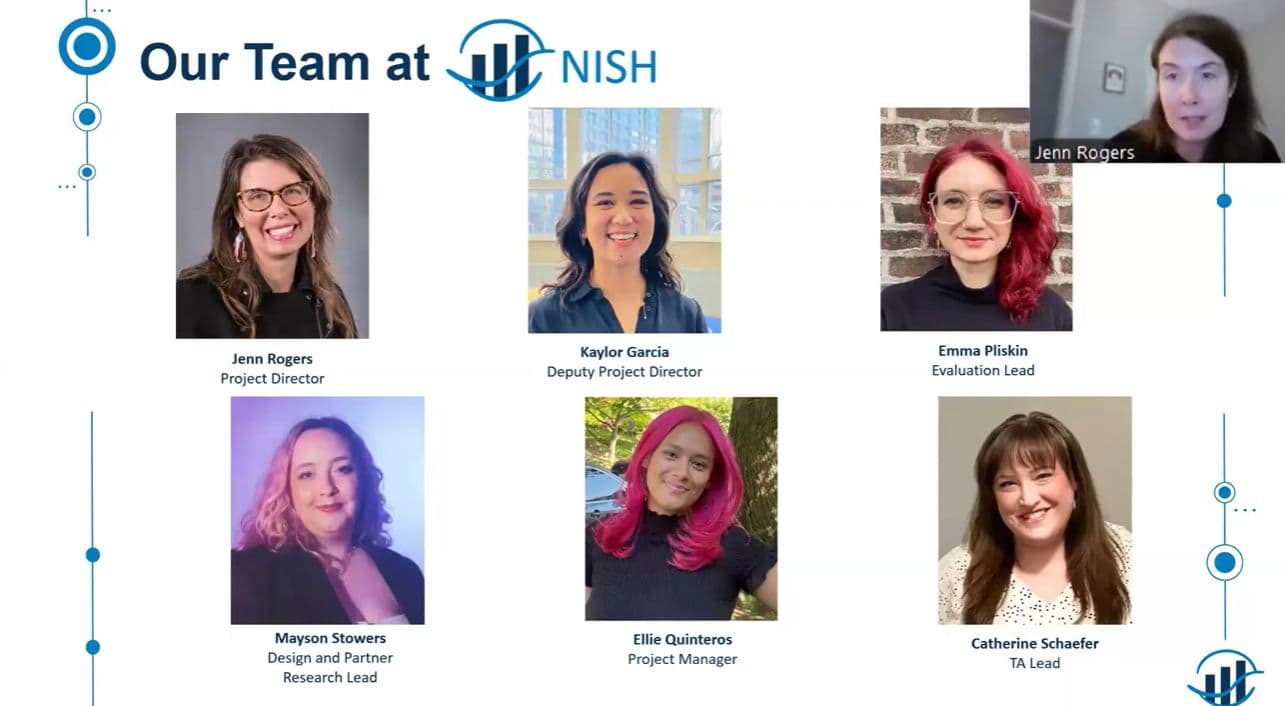
Suggested Citation: Rogers, J., Garcia, K., Stowers, M., Quinteros, E., Bogen, D., Gougisha, L., & Statton, A. (2026). Expanding screening and treatment across the pregnancy-to-neonatal care continuum. Child Trends. DOI: 10.56417/8725c4441j
This publication was made possible by cooperative agreement CDC-RFA-PS-23-0007 from the Centers for Disease Control and Prevention (CDC). Its contents are solely the responsibility of the authors and do not necessarily represent the official views of the Centers for Disease Control and Prevention (CDC).
Child Trends owns or has permission to use the photographs, audio, video, and other media on this webpage. You may not copy, download, scrape, reproduce, republish, distribute, change, modify, or exploit any media on this webpage without Child Trends’ prior written permission. Prohibited uses include, without limitation, training, testing, or improving an artificial-intelligence system or large language model; creating a digital replica of any person; imitating any person’s voice; or creating or distributing synthetic, altered, or misleading content.