
New Child Trends analysis of data from the Adoption and Foster Care Analysis and Reporting System (AFCARS) finds that only 62 percent of older youth ages 14-21 in the United States exited foster care to legal permanency in 2023; the comparable figure for children ages 13 and under was 98 percent. Legal permanency includes reunification with the child’s family of origin, adoption, guardianship, or living with a relative. Permanency should be the first goal for all children and young people in foster care, as it ensures that they have a legal connection to family as they transition into adulthood and prevents them from aging out of foster care without support.

Figure: The percentage of youth ages 14-21 who exit foster care to permanency has remained low for nearly a decade
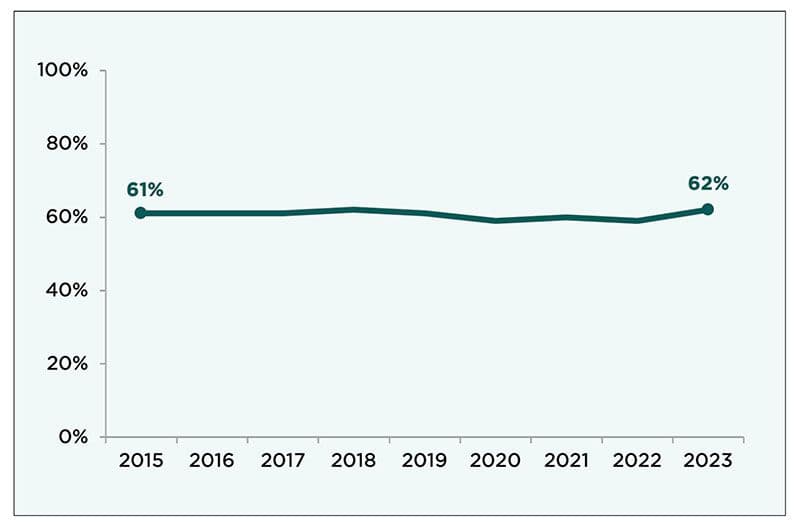
Source: Child Trends’ analysis of data from the Adoption and Foster Care Analysis and Reporting System (AFCARS). The figure includes young people ages 14-21 who exited foster care during the listed federal fiscal year.
Young people who exit foster care to permanency experience better young adult outcomes than youth who emancipate from, or age out of, foster care. Therefore, it is imperative that all children and youth are able to exit foster care to a permanent living arrangement as quickly and safely as possible—ideally before aging out of the foster care system.
Child Trends experts have compiled these data and other child welfare indicators in the Child Welfare Data Interactive, a one-of-a-kind data tool that allows users to examine state and national child welfare data on entries into foster care, child maltreatment, kinship caregiving, permanency, and older youth in foster care. Data are updated annually upon release of the latest edition of AFCARS. Currently, federal fiscal year 2023 is the most recent year of available AFCARS data.
Looking to partner with Child Trends to track trends on permanency and other child welfare indicators? Contact Rachel Rosenberg, PhD, at rrosenberg@childtrends.org.