

A new Child Trends analysis has found a decrease in the rate of foster care entries, from 3.5 per 1,000 children entering care in 2018 to only 2.9 per 1,000 children entering care in 2021.


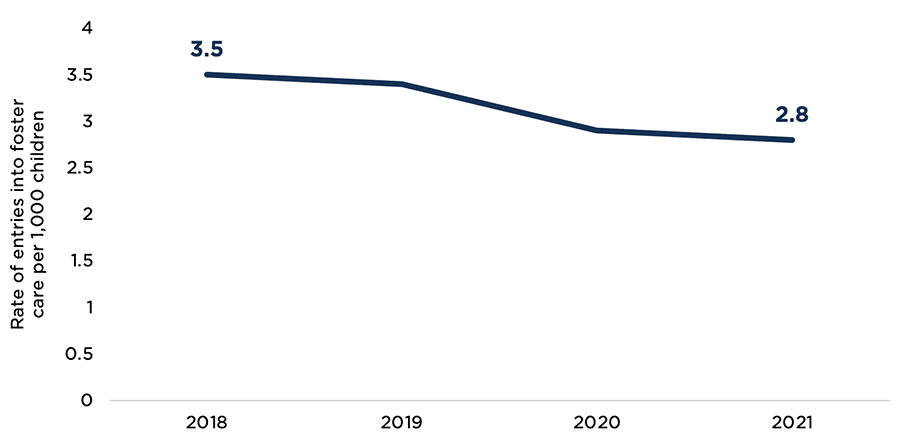
The Family First Prevention Services Act was passed in 2018, increasing the child welfare system’s focus on preventing child welfare involvement and keeping families together. The decrease in the rate of foster care entries (Figure 1) may reflect families receiving more prevention services, resulting in fewer children being separated from their parents or other caregivers. While foster care may be needed for some children, it is imperative that children remain with their families if at all possible.
Figure 1: The rate of children entering foster care declined from 2018 to 2021
Child Trends experts have compiled these data and other child welfare indicators in the Child Welfare Data Interactive, a one-of-a-kind data tool that allows users to examine state and national child welfare data on entries into foster care, child maltreatment, kinship caregiving, permanency, and older youth in foster care. Data are updated annually upon release of the Adoption and Foster Care Analysis and Reporting System (AFCARS). Currently, federal fiscal year 2021 is the most recent year of available AFCARS data.
Interest in working with Child Trends to examine key child welfare indicators? Contact Rachel Rosenberg, PhD at rrosenberg@childtrends.org.