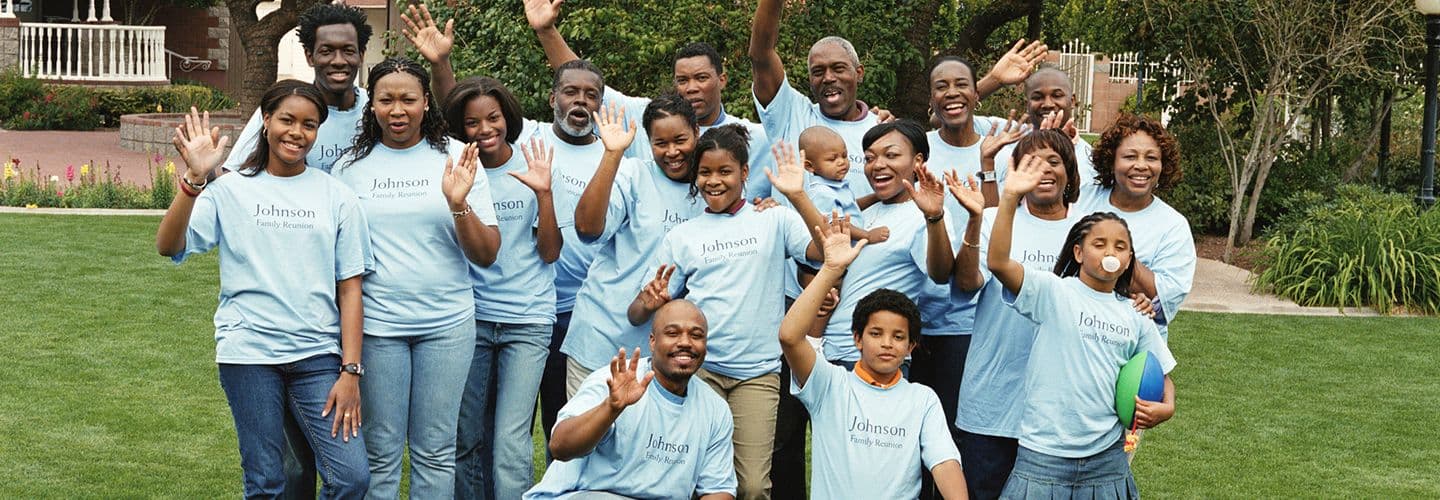
Black Families Flourishing (BFF) conducts rigorous, transparent research that explores the well-being of Black families in the United States. This multi-year project aims to highlight Black family strengths and cultural assets, and to identify policies and practice that support and accelerate their advancement, progress, and well-being in communities across the country. Support for the BFF Project is provided by the Robert Wood Johnson Foundation (RWJF).

Background
Anti-Black sentiments in the United States harm Black people, Black families, and the nation overall. The problem extends to the field of research and its historic focus on Black families’ deficits and a lack of attention to systems that impact them. The result is a distorted understanding of, and lack of appreciation for, the richness and diversity of Black families’ cultures, values, experiences, structures, and lifestyles; and of the formulation of policies and programs that value and enhance these attributes.
Intended Impacts
The BFF Project is focused on establishing a strengths-based understanding of Black families in the United States and exploring and informing the many policies, programs, and systems with which they engage. The project’s primary objectives include:
- Documenting the variation/heterogeneity of Black families, including cultural assets and strengths and the ways in which they support Black family well-being
- Conducting and using research to inform systems and narratives to strengthen policies and programs for and communication about Black families across the country
- Identifying innovative policies, programming, and solutions that can be tailored, scaled, and sustained for the benefit of Black families
- Strengthening and building community capacity to use research relevant to Black families
Subscribe to the Black Families Flourishing Newsletter
Research Activities
The BFF team consists of predominantly Black and culturally knowledgeable researchers, community advisors, Black families, and communicators. The BFF Project’s primary activities include developing and administering a nationwide survey of Black families in the United States and drawing on its findings—alongside findings from the Project’s own research agenda—to build capacity within communities to use evidence to shift systems and support Black family flourishing.
Below is a broad description of the tasks the BFF Project will undertake, by year.
Year One
In its first year, the BFF Project team will partner with parents/caregivers, community advocates and advisors, researchers and academics, and communications experts to shape the design of a national survey and other research and dissemination efforts that will be undertaken by the project. The team will also:
- Begin identifying areas of inquiry for the national survey and other research tasks.
- Conduct a scan to identify policies and programs that are relevant to Black families.
- Launch a website to house timely, high-quality resources and project findings.
Year Two
The BFF Project’s second year will focus on partnering with NORC at the University of Chicago to develop and launch a national survey to advance knowledge about Black families and how the systems with which they interact can create or hinder opportunities for flourishing.
The project team will analyze survey findings and conduct its own research that facilitates greater understanding of how, under what circumstances, and in what ways systems that serve Black families are working well.
Year Three and Beyond
While dissemination of project highlights and lessons learned will occur throughout the project, Year 3 and subsequent years will focus heavily on dissemination, engagement, and additional research. The team will actively engage its key constituents to interpret research findings, inspire the use of strengths-based evidence in policy and practice, activate and mobilize coalitions, and inform against harmful narratives about Black families. We will also draw on existing partnerships with national and local organizations and the media, as well as those developed in earlier years of the project, to publicize BFF Project learnings and develop plans for additional research.
Project Team
Child Trends

Chrishana M. Lloyd
Research Scholar

Rebecca Vivrette
Senior Research Scientist

Zakia Redd
Program Area Director, Youth Development
Sage Caballero-Acosta
Senior Research Assistant
Kenya Downing
Senior Research Assistant
Quiana Lewis Wallace
Research Scientist II
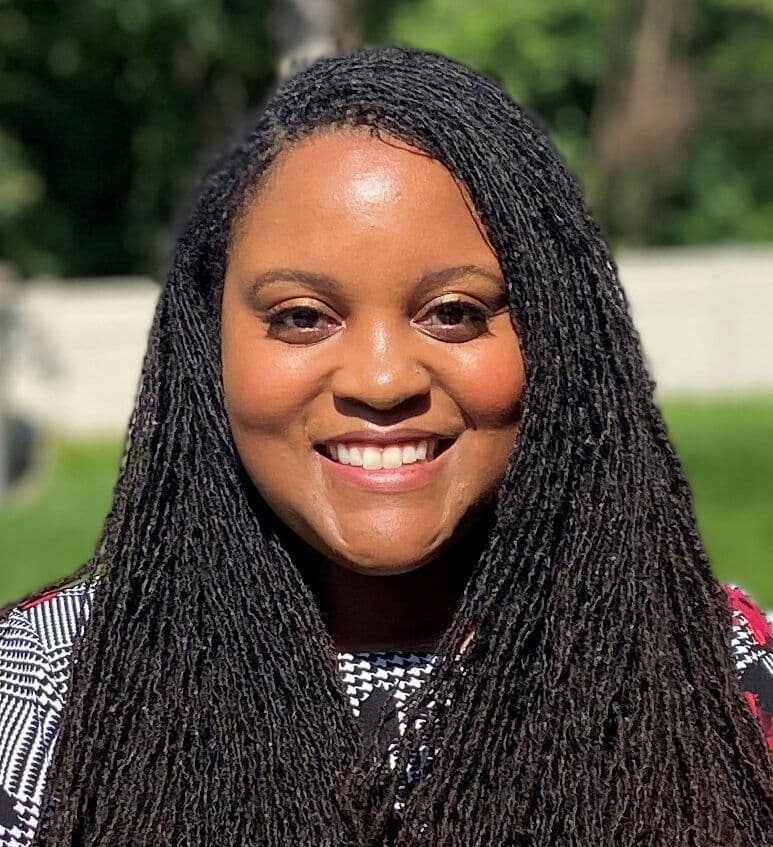
Shana E. Rochester
Research Scientist

Yosmary Rodriguez
Senior Research Analyst

Katie Richards
Senior Research Analyst
Ria Shelton
Research Assistant

Lauren Zarick
Senior Research Communications Specialist I
Core Advisory Group
- Christina Cross, Harvard University
- LesLeigh Ford, Urban Institute
- Alycia Hardy, National Black Child Development Institute
- Iheoma U. Iruka, University of North Carolina at Chapel Hill
- Latrice Rollins, Morehouse College of Medicine
- Deadric T. Williams, University of Tennessee-Knoxville
BFF launched alongside a parallel but distinct effort also funded by RWJF: the Latino Families Flourishing (LFF) Project, which has aligned its principles and objectives with those of the BFF Project.