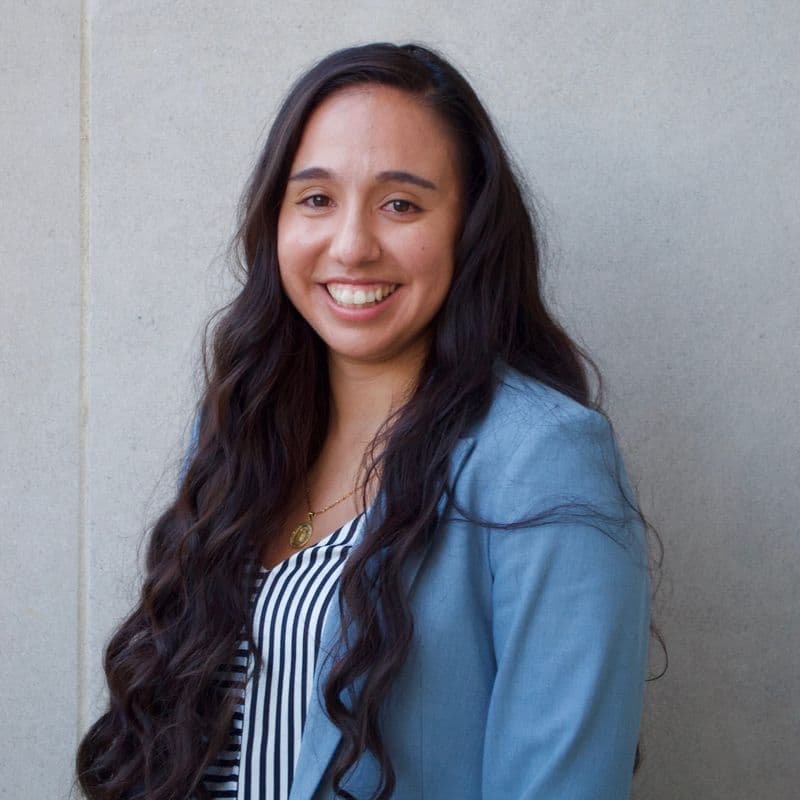
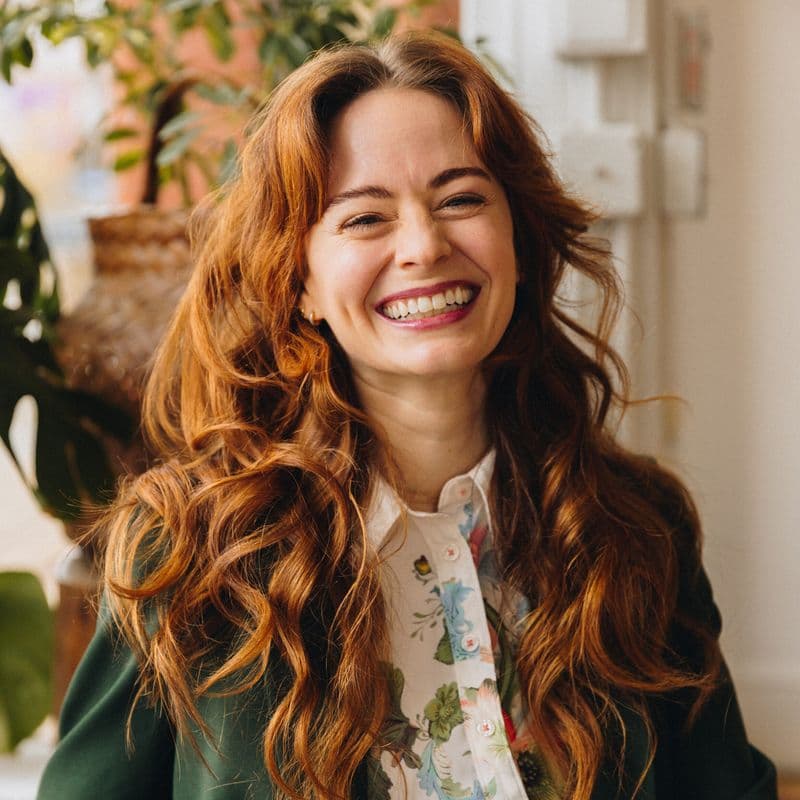
This podcast is part of a new series on Vida de PhD—a podcast hosted by Lorena Aceves, a research scientist at Child Trends, that explores stories of impact at the intersection of research and people. In collaboration with Child Trends, this series aims to spotlight researchers whose work meaningfully supports youth, families, and communities. In this inaugural episode, Lorena interviews Dr. Samantha Holquist, program area director for education at Child Trends, about her journey into research, her approach to community engagement, and her vision for the future of education research.
Stories of Impact at the Intersection of Research and People Podcast, Featuring Samantha Holquist
Below is a curated summary highlighting Samantha’s responses during key moments from the podcast.
Lorena Aceves (LA): What about research makes your heart happy?
Samantha shared that her joy comes from empowering students and educators to engage in research themselves. She finds fulfillment in watching others, especially students, become passionate about the data they collect and use these data to inform change. This hands-on engagement is what she believes brings research to life.
LA: Can you tell us about your background and research focus?
Samantha describes herself as a generalist with deep expertise in community-engaged research. She partners with subject matter experts to design and conduct research in collaboration with educators, students, families, and community leaders. Her work spans research on student engagement, college and career readiness, and student belonging, and she provides technical assistance to support school system improvement. She emphasized that her approach is centered on building local capacity to conduct and use research for systemic improvement.
LA: How did you get into research?
Research was not Samantha’s initial career path. Originally aiming to become a human rights lawyer, she studied political science and religious studies. Her personal experiences navigating school as a student with dyslexia sparked a desire to improve education systems. While working at District of Columbia Public Schools, a mentor advised her to pursue a PhD in education research to advance without traditional classroom or leadership experience. Through this process, she unexpectedly found a passion for research and shifted her career trajectory.
LA: Can you share an example of how your research has had a positive impact?
Samantha highlighted a three-year National Science Foundation project focused on developing a culturally responsive measure of math engagement that centers the experiences of Black and Latino students. Working closely with students and teachers, the project empowered participants to define math engagement, develop survey items, and use data to recommend district-level changes. This participatory process has already led to shifts in how teachers approach instruction and student engagement and has inspired students to become advocates for change in their own schools.
LA: How has community-engaged research changed you as a person and researcher?
Samantha described a personal transformation from seeing issues as black-and-white to embracing complexity and multiple truths. She believes her work has led her to develop a stronger sense of empathy, humility, and openness. She listens more deeply and facilitates spaces in which diverse perspectives are valued in shaping solutions. This shift, she noted, is a critical evolution for researchers working in education systems that require context-specific approaches.
LA: What is your vision for the future of education research?
Samantha hopes education research will continue to move away from rigid, one-size-fits-all approaches. Instead, she envisions a future where researchers collaborate with school systems to design adaptable, responsive interventions. Samantha raised concerns about EdTech tools that are difficult to customize, warning against tech solutions that force schools to change their systems to fit the tool. She also called for renewed focus on connecting education with workforce development, particularly in the wake of disruptions caused by COVID-19.
LA: What uplifting words would you like to share with researchers and communities?
Her message is clear: Research is here to stay, and anyone can engage in it. Samantha emphasized that research does not have to look—or be carried out in—one particular way. Students, educators, school leaders, and community members already do research daily by asking questions and seeking understanding. She encouraged listeners to embrace evolving methodologies and trust in the enduring power of research to drive meaningful change.
Suggested citation
Aceves, L., & Holquist, S. (2025). Stories of impact at the intersection of research and people, featuring Samantha Holquist. Child Trends. DOI: 10.56417/1047t1041t