

To ensure that child care and early education (CCEE) options meet Indigenous families’ preferences and needs,[1] CCEE practitioners, researchers and evaluators, and funders should consider how Indigenous worldviews and community contexts shape and influence Indigenous families’ child care choices. Child care plays an important role in supporting children’s development and workforce participation among parents and caregivers across the United States. When selecting child care, families balance a variety of factors, including effort required to access care, affordability, availability of child developmental supports, and their own needs and preferences. For Indigenous families, child care also presents an opportunity to support and sustain Indigenous cultures, languages, and value systems.
A greater understanding of Indigenous families’ child caregiving preferences and needs can inform frameworks for program implementation, measures of success, and allocation of resources in ways that facilitate a robust supply of high-quality, culturally aligned CCEE options for families. This piece shares foundational considerations for those engaged in CCEE implementation, research and evaluation, and funding as they endeavor to support Indigenous families and communities. We conclude with a set of research and evaluation recommendations.
CCEE Considerations for Indigenous Families and Communities
Indigenous Peoples often conceptualize child caregiving broadly and holistically.
Indigenous worldviews and perspectives on child caregiving commonly center relationality and connectedness and can shape a family’s experiences very early in a child’s life (e.g., when planning for a child, during pregnancy, at birth). While each Indigenous community and family is unique, children are often central to Indigenous origin stories, teachings, and songs, which provide guidance and reminders that help relatives fulfill their roles and responsibilities related to child caregiving across generations. Caring for a young child through an Indigenous worldview is a facet of being a good relative and a member of a family, community, clan, Tribe, or Nation—transcending conceptualizations of child care in mainstream society and typical CCEE programming and funding environments.
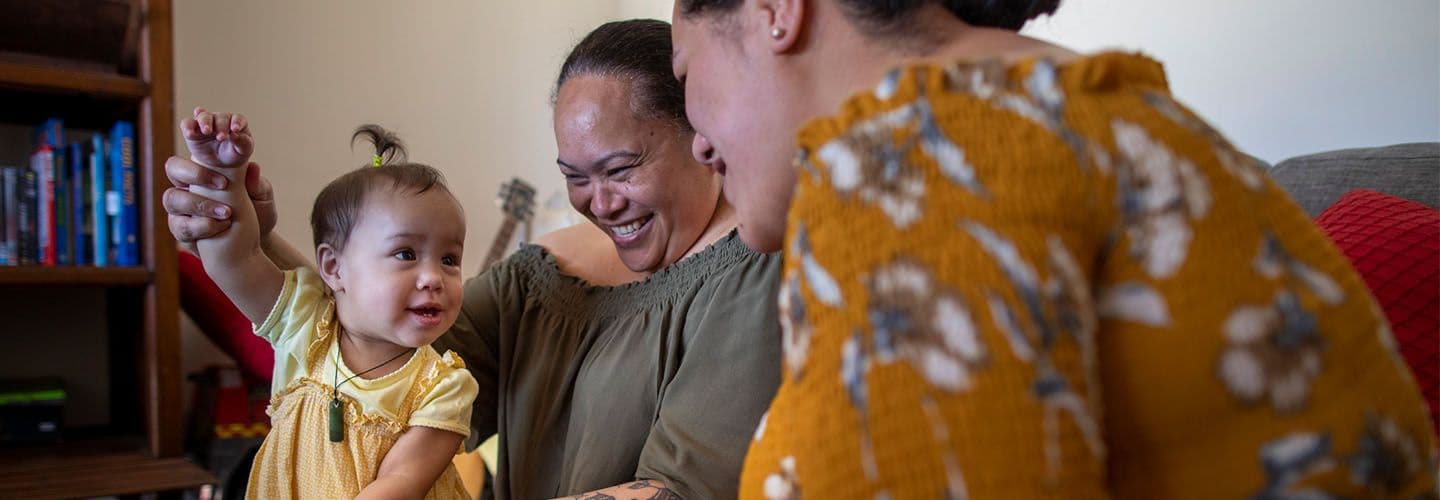
Within Indigenous worldviews, the act of providing care for young children goes beyond meeting their basic physical and developmental needs within a nuclear family structure; rather, it is a sacred responsibility that extends across places, community members, and generations. Child caregiving is woven into the fabric of community life, where the responsibility for raising children is shared collectively and grounded in cultural values, practices, and spiritual understandings. Caregiving of young children from an Indigenous perspective provides a support system that allows parents to strengthen their children’s cultural knowledge through stories, songs, and values from their culture and community. Caregivers in this support system may be aunties, uncles, grandparents, siblings, cousins, close family friends, and neighbors. Regardless of their biological relationship to the child, individuals in this support system may all be considered relatives from a family’s perspective; being an Indigenous relative can come via a blood relationship, Indigenous community connection, or cultural relationship (e.g., clan or village systems, ceremonial relationships), or by virtue of one’s caregiving relationship to the child and family.
By honoring child caregiving as a multigenerational, communal, and sacred responsibility, Indigenous Peoples affirm that every child belongs to a larger collective. This approach to caregiving not only fosters a child’s individual growth but also strengthens the whole community’s resilience, continuity, and cultural sovereignty.
CCEE programs that serve Indigenous families are increasingly developing child care and rearing environments aligned with Indigenous worldviews.
A growing number of CCEE programs—including center-based and preschool programs, as well as home-based programs—are integrating approaches that align with Indigenous worldviews and Knowledge systems. These programs recognize caregiving and education as being inseparable from culture, language, spirituality, and relational responsibilities, and they intentionally nurture children in ways that align with Indigenous understandings of development and community life.
Programs grounded in these approaches—such as Saad K'idilyé, Keres Children’s Learning Center, Dakhódiapi Wahóȟpi – Dakota Language Nest, ‘Aha Pūnana Leo, and Little Cherokee Seeds—do not simply teach language and culture; rather, they create holistic, home- and family-like environments where knowledge is shared in ways that align with the early learning experiences of their ancestors. For example, activities follow seasonal patterns and create opportunities for children and their families to be immersed in nature, gather and prepare foods, and participate in cultural customs and ceremonies. In addition to serving in the typical roles of CCEE (e.g., supporting early child development and parental workforce participation), these programs aim to revitalize and sustain Indigenous languages, cultural practices, and value systems with the young children and families who will carry these essential teachings on to future generations.
While CCEE settings that center Indigenous approaches to child caregiving are not widely available to Indigenous families and comprehensive data on Indigenous child care preferences are limited, the data that are available suggest that Indigenous families would welcome increased access to these types of CCEE settings. For example, a 2021 Bipartisan Policy Center survey of 250 parents who were either American Indian or Alaska Native (AIAN) or who had an AIAN spouse/partner found that roughly one third (34%) preferred child care provided by a spouse/partner or relative (e.g., grandparent or aunt/uncle), and an estimated 41 percent preferred care delivered by a Tribally operated or sponsored provider. Respondents also indicated that trust and a culturally focused learning environment were important factors in their child care choices. Similarly, findings from the 2015 AIAN Family and Child Experiences Survey (AIAN FACES) indicate that families whose children were enrolled in Region XI Head Start programs (operated by federally recognized Tribes and Tribal consortia) valued their child’s exposure to language and culture. Across all responding parents—whether they reported that English only or at least some Native language was spoken in their home—over 90 percent indicated that it was somewhat or very important for their child to learn a Native language.
Taken together, these findings highlight both the need and the tremendous opportunity to expand CCEE settings that reflect Indigenous caregiving approaches. By centering Indigenous languages, cultures, and relational caregiving, CCEE programs can not only support child development and family stability, they can also play a critical role in sustaining Indigenous communities’ cultural continuity and resilience.
Community context matters for supporting Indigenous families’ access to CCEE.
In addition to developing a greater understanding of how Indigenous worldviews shape families’ child care preferences, researchers and practitioners should also devote more attention toward learning how Indigenous families’ preferences intersect with other dimensions of CCEE access (effort required to access care, affordability, availability of child developmental supports, family needs) to influence the type of care families ultimately use. For example, although 34 percent of parents surveyed by the Bipartisan Policy Center preferred care provided by spouses/partners, grandparents, and other relatives, more than half (52%) reported that these individuals are their primary source of child care. Indigenous families live in reservation, rural, and urban communities across the United States; within each of these contexts, community infrastructure (e.g., housing, transportation, economic opportunities), the CCEE environment (e.g., funding sources, licensing and regulations, eligibility criteria, quality), and access to Indigenous cultural and language resources may vary in unique ways that drive families to rely on child care sources that do not necessarily align with their preferences.
Factors influencing CCEE in reservation and rural communities
Some factors may be particularly salient for CCEE choices and preferences in reservation and rural contexts, including the following:
- Economic security: Native American households experience lower economic security and a range of barriers to economic opportunity. For example, access to housing and financing to support home ownership varies, with Native Americans paying more on average to finance home purchases than non-Native individuals. This may impact families’ ability to live in Tribal communities (closer to Tribally operated child care) and to have the economic stability and housing quality needed to provide in-home child care to others in these settings. In addition, periods of national economic growth have not translated into similar gains for individuals living on Native lands, and disparities in income persist between non-Native and Native individuals on Native lands.
- Transportation and distance: In rural and reservation areas, families often face long distances between housing, child care, and employment opportunities. Limited transportation options and child care operating hours that are misaligned with families’ needs and preferences may present challenges for families to use the type of child care they prefer.
- Funding and resources: While Tribes and Tribal consortia can use Tribal Child Care and Development Fund (CCDF) dollars for facility construction and transportation, not all communities have the capacity to seek and manage these resources. To support the child caregiving needs of student parents in certain rural and reservation communities, some Tribal Colleges and Universities are implementing promising strategies such as co-located child care and child-safe transportation options on their campuses.
Factors influencing CCEE in urban communities
With more than 75 percent of AIAN people estimated to live outside of Tribal lands, it is also important to consider factors that may influence CCEE choices and preferences among Indigenous families who live in urban and metropolitan areas. These may include:
- Funding limits: Tribal CCDF service areas are commonly designated as those areas on, near, or in close geographic proximity to a Tribe’s lands. The ability to access Tribal child care subsidies is limited by Tribal CCDF service areas, which may not encompass the many places where Indigenous families live and need child care.
- Cultural unfamiliarity: Families may encounter CCEE providers who are unfamiliar with Indigenous cultures, languages, and caregiving practices.
- Diverse family backgrounds: CCEE providers may serve families from multiple Indigenous backgrounds, as well as non-Indigenous families, making it challenging for them to offer programming that reflects the wide range of languages, traditions, and cultural perspectives represented.
Whether they live in reservation, rural, or urban settings, Indigenous families face structural barriers that shape how they access child care—often leaving them to rely on arrangements that do not fully reflect their preferences. Addressing these barriers means not only expanding culturally grounded CCEE options, but also improving economic security, transportation, and flexibility in funding to ensure that families can access the care that best supports their children and communities.
Implications for CCEE Research and Evaluation Focused on Indigenous Families
To ensure that child care meets Indigenous families’ needs and preferences, CCEE research and evaluation efforts should consider the following:
- The ways in which Indigenous worldviews perceive caring for young children through a broader and more holistic lens
- The unique and culturally grounded ways in which Indigenous CCEE providers deliver services tailored to the families they serve and to values around sustaining Indigenous languages and cultures
- The range of geographic and resource contexts that shape Indigenous families’ child care choices and abilities to have their children cared for in the ways they prefer.
Applying strategies that promote cultural safety within CCEE research and evaluation focused on Indigenous families—for example, by prioritizing Indigenous voices, respecting local protocols, and examining how power and colonial histories shape caregiving—can deepen understanding of child caregiving within Indigenous communities. Such approaches can highlight the experiences of Indigenous families and child care providers to better align child care policy, practice, and resources with families’ needs.
Indigenous CCEE providers are already leading the way by embedding cultural teachings, language revitalization, and family-like environments into their programs. Documenting strategies that work for Indigenous children and families can provide models for other communities to build from and grow their own understanding of how Indigenous child caregiving nurtures both individual child development and community resilience. Research and evaluation that takes a broader scope and aims to shed light on Indigenous families’ experiences across a range of child care types (e.g., center-based, family, in-home) and contexts (e.g., rural, reservation, urban; Tribally and non-Tribally operated) is also necessary to meet Indigenous families’ preferences regardless of where they live. Expanding and improving data collection, especially for urban Indigenous families, will help fill critical gaps in knowledge and inform more responsive services.
Early childhood is a critical period for learning one’s culture and language and forming one’s identity and sense of belonging. Given increasing interest in culturally grounded approaches that integrate Indigenous stories, languages, and practices into child care, research and evaluation approaches that are truly aligned with Indigenous worldviews and caregiving practices can support the development of CCEE policies and programs that honor Indigenous families’ preferences for their children.
Recommendations for research and evaluation
- Center Indigenous worldviews on child caregiving: By acknowledging and honoring Indigenous understandings of child caregiving as holistic, relational, and multigenerational, research and evaluation efforts recognize that child care not only supports child development and workforce participation—it also helps preserve and sustain Indigenous languages, cultures, and sovereignty across generations.
- Value CCEE programs that are grounded in Indigenous cultures: Research and evaluation should prioritize documenting and learning from programs that embed Indigenous languages, cultures, and traditional practices, recognizing them as essential to sustaining Indigenous communities and cultural identities.
- Account for Indigenous community contexts: Indigenous families’ access to preferred care is shaped by their geographic, economic, and structural contexts. The realities of life on reservations, in rural areas, and in cities differ and should be studied in relation to Indigenous child caregiving preferences and access.
- Strengthen data and collaboration: Improve research and evaluation data collection—especially for urban Indigenous families and families using a range of care types (e.g., home-based, family, center-based)—to better align services with Indigenous families’ needs.
Acknowledgments
The authors thank the following Child Trends staff members for their reviews and feedback on this brief: Matt Haugen, MA; Brent Franklin, MPP; Katherine Paschall, PhD; and Dominique N. Martinez.
We are deeply grateful to the Indigenous families, communities, collaborators, and leaders whose knowledge and lived experiences have informed this work.
Footnote
[1] Indigenous is inclusive of American Indian and Alaska Native (AIAN), Native Hawaiian, and other Indigenous Peoples in the United States and U.S. territories, including those that are federally recognized or state-recognized. When referencing specific data sources or citations throughout this product, the terminology from the original source is used; therefore, AIAN, Tribal, and Native American also appear.
Suggested citation
Around Him, D., Jake, L., & Yamane, C. (2025). Honoring Indigenous families’ preferences and contexts in child care and early education. Child Trends. DOI: 10.56417/2927t9964n