



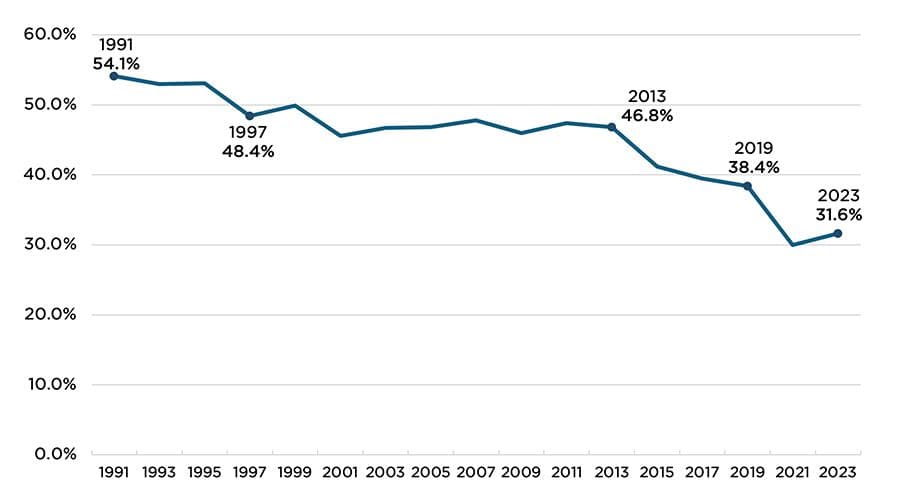
Today’s high schoolers are reporting lower rates of sexual activity than previous generations. According to the Centers for Disease Control and Prevention’s (CDC) Youth Risk Behavior Survey (YRBS) from 2023, 32 percent of high schoolers said they’ve ever had sexual intercourse. That’s a noticeable drop from 54 percent in 1991 and 47 percent in 2013 (see Figure 1).
Importantly, the YRBS asks, “Have you ever had sexual intercourse?”—but teens may interpret this differently based on their identities, experiences, and what they consider to be sex. For LGBTQ+ youth in particular, this question might not fully reflect their sexual experiences.
Figure 1: The percentage of high school students who have ever had sex has decreased over the last three decades
Among sexually active high school students, at last sexual activity:
- 52 percent used a condom.
- 33 percent used a form of hormonal birth control.
High school females and males reported similar rates of ever having sex (31% and 32%, respectively), and 22 percent of females and 20 percent of males in 2023 said they were currently sexually active. LBGTQ+ students reported the same rate of current sexual activity (21%) as their cisgender and heterosexual peers.
High schoolers’ experiences related to consent and safety vary greatly, with female students reporting rates of sexual violence nearly three times higher than male students. Specifically, 17 percent of high school females said they’ve experienced sexual violence in the past year, compared to 6 percent of boys. LGBTQ+ students reported higher rates of sexual violence (20%) than their cisgender and heterosexual peers (8%).
Why This Matters
Fewer teens today report having sex than in previous generations—a shift that reflects changing social norms. But this trend raises important and often overlooked questions: Are young people missing out on opportunities for age-appropriate sexual development, healthy relationship experiences, and opportunities to learn about consent and intimacy in safe, supported ways?
A lack of sexual experience isn’t inherently positive or negative. But when lower rates of reported sexual activity occur alongside high rates of sexual violence, limited access to inclusive sex education, and widespread mental health challenges, they reflect a more complex reality. We must ensure that all young people—regardless of whether (or when) they become sexually active—have access to honest, developmentally appropriate information and support to navigate relationships, identity, consent, and safety.
Child Trends experts have extensive experience studying sexual and reproductive health. If you are interested in learning more about our work on these topics, please reach out to Jenn Rogers, senior program area director of Sexual and Reproductive Health.