

This toolkit provides research-informed recommendations for existing Healthy Marriage and Relationship Education (HMRE) programming to become more inclusive and relevant for LGBTQ+ (Lesbian, Gay, Bisexual, Transgender, Queer or Questioning, and other gender- or sexually-minoritized) people. While not exhaustive, we hope this toolkit provides a starting point for practitioners to make their programming more inclusive for people across all LGBTQ+ identities.
These recommendations are informed by key facts about LGBTQ+ relationships, a review of LGBTQ+ inclusive terminology, and research on some of the key stressors and sources of resilience and thriving for LGBTQ+ couples. Importantly, same-gender couples and individuals in LGBTQ+ romantic relationships are similar in many ways to their heterosexual counterparts. However, there are also some distinct features and relationship dynamics among LGBTQ+ romantic relationships that may inform program priorities, content, and delivery. We believe this toolkit can help HMRE program providers, project managers, and educators better understand and serve LGBTQ+ couples and families.
Many Americans identify as lesbian, gay, bisexual, or transgender (LGBT), and this identification is increasing across generations as social and political environments have generally trended toward becoming more accepting.[1] According to data collected in 2022, about percent of American adults and as many as 20 percent of young Americans identify as LGBT.[2] Committed, romantic relationships are an important part of life for LGBT individuals; in 2021, the United States had about 1.2 million same-sex couple households, including about 710,000 married same-sex couples.[3] The number of same-sex households has steadily increased since 2005 according to United States Census tracking.
Decades of research documents the effectiveness of HMRE programming in helping individuals and couples develop and maintain healthy relationships. Programs have been linked to improved relationship quality, co-parenting functioning, relationship knowledge and skills, and individual mental health outcomes for adult couple program participants.[4] Although the populations served by HMRE programs vary widely, most programs are predominantly informed by research on heterosexual couples with limited consideration of potentially different relationship dynamics that occur for LGB couples.[5],[6],[7] Although some HMRE programs may not intend to exclude LGBTQ+ couples, the lack of representation in program materials may deter LGBTQ+ couples and families from engaging with HMRE programming or feeling comfortable when they do. The purpose of this toolkit is to help existing HMRE programs become more inclusive of LGBTQ+ audiences by raising attention to pertinent issues for this population and providing accessible, evidence-based tips for program adaptations.
This brief was created by the Marriage Strengthening Research & Dissemination Center, a partnership between Child Trends, the National Center for Family & Marriage Research at Bowling Green State University, and Public Strategies.
The authors thank the steering committee of the Marriage Strengthening Research and Dissemination Center (MAST Center), Catherine Schaefer, and Dr. Allen Barton for their feedback on earlier drafts of this toolkit and thank Ria Shelton for her research support.
Editor: Mark Waits
Designer: Catherine Nichols
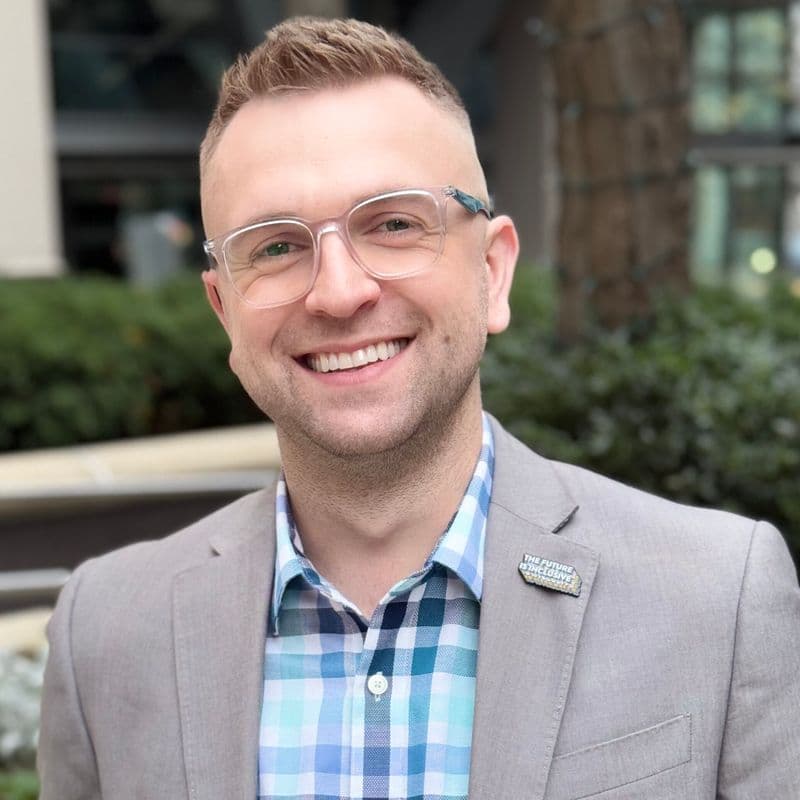
Matthew Rivas-Koehl is a PhD student in the Department of Human Development and Family Studies at the University of Illinois Urbana-Champaign. His research focuses on promoting health and satisfaction in romantic relationships, particularly for LGBTQ+ families.
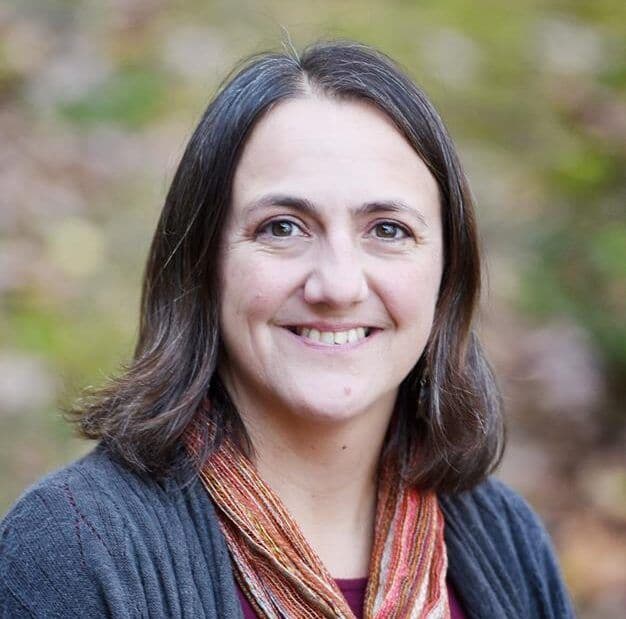
Menglin Wei is a PhD student in the Department of Human Development and Family Science at Auburn University. Her research focuses on couple relationships, their health behaviors, and health co-regulation with a focus on relationship education programming and evaluation.
Mindy E. Scott, PhD, is Co-Principal Investigator of the MAST Center and leads the Program Implementation and Evaluation research area. She is a sociologist and family demographer at Child Trends whose primary research interests relate to family formation, family strengthening, responsible fatherhood, and adolescent sexual and reproductive health. Dr. Scott studies the design and implementation of healthy marriage and relationship education programs through several projects focused on youth, diverse family structures and relationships, and fathers.
Elizabeth Wildsmith, PhD, is Co-Principal Investigator of the MAST Center and oversees the Center’s building capacity activities. She is a sociologist and family demographer at Child Trends who studies family formation and reproductive health. Her research examines marriage, cohabitation, and childbearing, as well as how social and family contexts may increase exposure to, or offer protection from, risk factors associated with the negative health and well-being of women, children, and families.
McCarthy, J. (2022). Same-sex marriage support inches up to new high of 71%. Gallup. https://news.gallup.com/poll/393197/same-sex-marriage-support-inches-new-high.aspx
Jones, J. M. (2023). U.S. LGBT identification steady at 7.2%. Gallup. https://news.gallup.com/poll/470708/lgbt-identification-steady.aspx
United States Census Bureau (2021). Key demographic and economic characteristics of same sex and opposite-sex couples differed. https://www.census.gov/library/stories/2022/11/same-sex-couple-households-exceeded-one-million.html
Hawkins, A. J., Hokanson, S., Loveridge, E., Milius, E., Duncan, M., Booth, M., & Pollard, B. (2022). How effective are ACF-funded couple relationship education programs? A meta-analytic study. Family Process, 61(3), 970–985. https://doi.org/10.1111/famp.12739
Buzzella, B. A., Whitton, S. W., & Tompson, M. C. (2012). A preliminary evaluation of a relationship education program for male same-sex couples. Couple and Family Psychology: Research and Practice, 1(4), 306–322. https://doi.org/10.1037/a0030380
Whitton, S. W., Weitbrecht, E. M., Kuryluk, A. D., & Hutsell, D. W. (2016). A randomized waitlist-controlled trial of culturally sensitive relationship education for male same-sex couples. Journal of Family Psychology, 30(6), 763–768. https://doi.org/10.1037/fam0000199
Whitton, S. W., Scott, S. B., Dyar, C., Weitbrecht, E. M., Hutsell, D. W., & Kuryluk, A. D. (2017). Piloting relationship education for female same-sex couples: Results of a small randomized waitlist-control trial. Journal of Family Psychology, 31(7), 878–888. https://doi.org/10.1037/fam0000337