


A new 2026 Colorado law guarantees 12 weeks of paid leave for parents with an infant in the neonatal intensive care unit (NICU). NICUs provide specialized support for babies who are born preterm, have a low birth weight, or have a health condition or symptoms at birth that require intensive medical care. In 2023, nearly one in 10 (9.8%) babies were admitted to the NICU to receive intensive care from a team of medical providers, up from 8.7 percent in 2016. In many cases, their parents and caregivers did not have access to paid family medical leave (PFML) to be with them during that critical time.
Babies can spend several weeks or months in the NICU after birth, so parents and caregivers often face multiple stressors and competing demands. Medically, the birthing parent is recovering from birth and any complications experienced during labor and delivery. In some cases, parents and caregivers are learning about and navigating new diagnoses and treatments for their newborn baby. In addition to managing these medical needs, parents and caregivers often experience periods of separation from their infant in the NICU—due to the need to care for other children at home, hospital rules that limit visiting hours or overnight stays, or the need to return to work—any of which can negatively impact parent-child attachment and parents’ ability to bond with their child. As a result, parents and caregivers with a child in the NICU have reported feelings of stress, separation, strain, a lack of control, social isolation, and mental health challenges.
One reason many parents and caregivers with children in the NICU need to return to work is because they do not have access to PFML. A majority of working adults do not have PFML through their employers, with notable racial and ethnic disparities: Black and Hispanic workers are less likely to have access to PFML than White workers. Disparities in access to leave are particularly problematic given differences in NICU admittance by race. In 2023, infants whose birthing parent was non-Hispanic Black had the highest NICU admittance rate at 13.2 percent.
Nearly 10 percent of all infants were admitted to a neonatal intensive care unit (NICU) in 2023
Percentage of infants admitted to the NICU in 2023, by birthing parent race and Hispanic origin
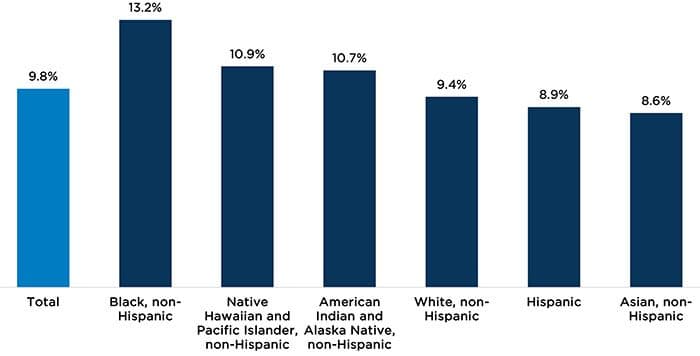
Source: NCHS Data Brief, Number 525, March 2025; originally from National Center for Health Statistics, National Vital Statistics System, natality data file
As of March 2026, 13 states and the District of Columbia have mandatory policies that provide PFML to all eligible residents.[1] Colorado was the first state to pass a law providing up to 12 weeks of additional paid leave specifically for parents and caregivers to be with their infants while they are in the NICU.
Many parents and caregivers whose infants require longer NICU stays must decide between taking unpaid leave to be with their children—which may not be feasible—or returning to work. Colorado’s policy represents one way to resolve this tradeoff and support families while they are caring for an infant in the NICU. While the program has only been recently implemented and has not yet been evaluated, it offers an exciting potential innovation for other states to ensure that families with medically vulnerable newborns have access to paid leave—both while their children are in the hospital and once they arrive home.
Child Trends has developed a Guide to Evaluating Paid Family and Medical Leave Policies to help states and localities assess whether their policies, including policies targeting leave for parents of babies in the NICU, are achieving their intended outcomes. If you are interested in learning more about this guide, or in working with us on evaluating paid family and medical leave policies, please contact Kate Steber, Katy Falletta, or Julianna Carlson.
Footnote
[1] States with voluntary PFML policies do not require that employers provide PFML and instead allow the private insurance market to sell paid family leave insurance, which employers can elect to purchase for their employees and/or which individuals can purchase independently. Approaches to voluntary PFML policies vary. For example, Texas strictly clarifies that private insurers are permitted to sell PFML plans, while New Hampshire contracts with insurance carriers that provide a base plan in the state and purchases coverage for state employees to support the private market. We discuss some of the implications of voluntary versus mandatory PFML policies in this brief.
Suggested citation
Steber, K., Falletta, K., & Carlson, J. (2026). Colorado’s new paid leave initiative aims to support parents of newborns in intensive care. Child Trends. DOI: 10.56417/1409o1150l