

In this brief, we outline findings from a study on protective community resources (PCRs) involving 44 Black parents or caregivers of children ages 17 and under from eight diverse cities: Cleveland, Detroit, Nashville, New York City, Philadelphia, Sacramento, Seattle, and Tampa. Specifically, we describe:
- Categories of PCRs that promote Black child and family well-being
- Benefits associated with these resources, as well as disparities in families’ access to them
- Implications of the study’s findings for policies and professional practices aimed at strengthening families and promoting the welfare of all children and youth
Protective community resources (PCRs) are elements within a community that can have a positive and significant influence on children's growth and development. PCRs include various people (e.g., educators and peers), places (e.g., playgrounds and libraries), and things (e.g., social services and extracurricular activities). Previously, we introduced a bibliographic tool to examine 172 studies on PCRs. A systematic review of these studies and a related brief identified several limitations that include:
- An overreliance on quantitative survey designs
- A lack of studies centering the voices of children, youth, and families
- A lack of research on how racially and ethnically diverse groups of children, youth, and families access and experience PCRs
To address these limitations, we collaborated with the National Black Child Development Institute (NBCDI)—an organization that has promoted the healthy development and well-being of Black children and families for over 50 years[1]—to conduct a community mapping study on PCRs with Black families with children from birth to age 17.
The study sought to answer three key questions:
- How do Black families with children define PCRs?
- What benefits do they receive from these resources?
- What PCRs do they identify as being desirable but largely inaccessible?
The authors would like to thank the following NBCDI leaders and Black Child Development Institute (BCDI) village leaders for their invaluable support in completing the study.
- Kim Keating—research director, NBCDI
- Kerron Kalloo—community engagement director, NBCDI
- Rhonda Carloss-Smith—BCDI-New York City
- Lola Rooney—BCDI-Philadelphia & Vicinity
- Gloria Blevins—BCDI-Ohio
- Monica Thompson—BCDI-Detroit
- Emma Osa-oni—BCDI-Nashville
- Daphne Fudge—BCDI-Greater Tampa Bay
- Kimberly Early—BCDI-Seattle
- Sharron Saffold—BCDI-Sacramento
Methods
This study was designed to address gaps in the current literature on PCRs by centering the perspectives and experiences of Black children and families in ways that traditional research methods have not. Using a community mapping strategy (i.e., a participatory method that focuses on community assets), we aimed to understand how Black families with children from birth to age 17 define PCRs—exploring both the benefits they derive from these resources and the PCRs they find desirable but largely inaccessible.
We engaged NBCDI and local BCDI village leaders in the consulting and planning stages of the study design, and we collected information directly from community members.
Table 1: List of study partners and the nature of their engagement
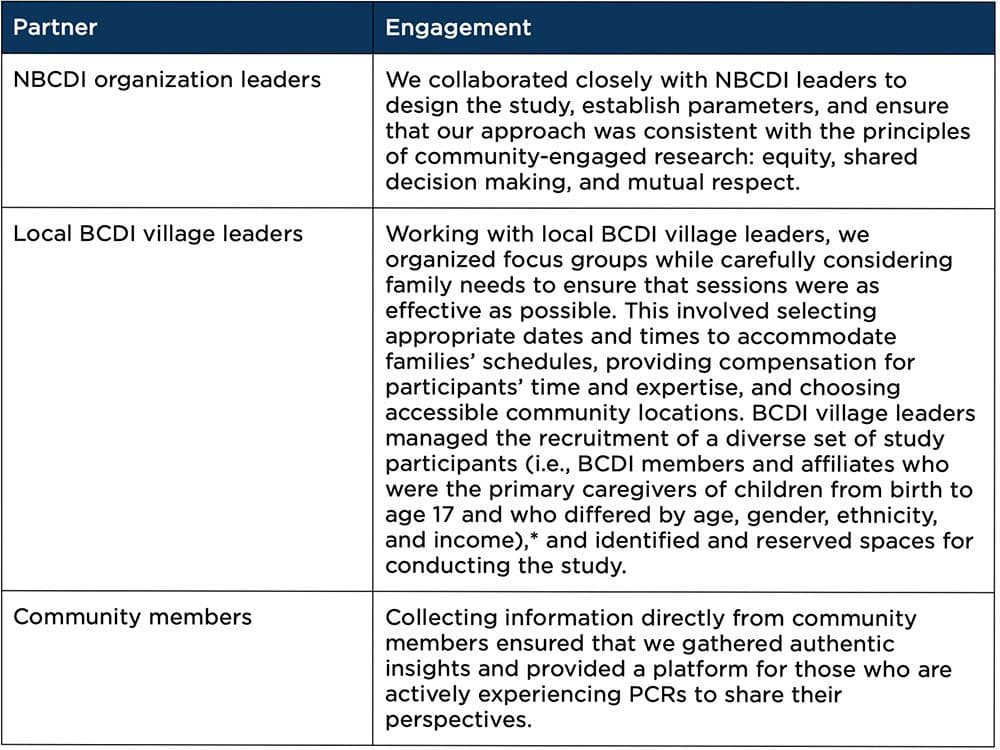
* Before the study began, BCDI village leaders attended a training session led by Child Trends staff. This training covered the principles of ethical research and emphasized village leaders’ role in upholding these principles throughout the study.
From March through April 2024, we collected information directly from community members at eight sites nationwide, including churches, day care centers, and libraries. Each session involved five to seven participants who received compensation in the form of a $250 gift card. The two-hour sessions began with an overview of the study’s aims, after which we obtained informed consent. Participants were then asked to complete a short survey to gather data on age, income, and other demographic characteristics.
Following the survey, participants engaged in a three-part mapping activity where they 1) depicted existing PCRs within their communities, 2) identified additional resources that could enhance the well-being of children and families but are currently missing, and 3) shared experiences of joy related to a protective resource in their communities. A follow-up focus group discussion accompanied each part of the mapping activity, allowing participants to share their experiences, insights, and ideas—these discussions were audio recorded and later downloaded and transcribed for analysis using Microsoft Word. After data collection, we visited and photographed several local community sites identified by the participants and wrote a site visit summary to reflect on the data, capture initial impressions, and identify emergent themes.
Figure 1: Location of BCDI village data collection sites in 8 states
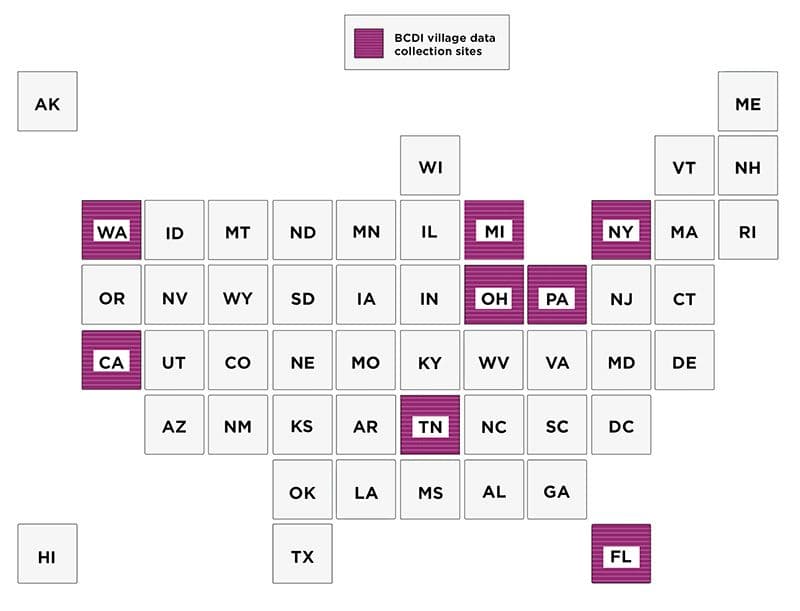
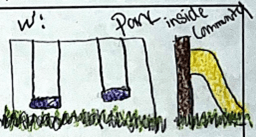
Figure 2: Example of a wanted (desired) but largely inaccessible PCR drawn by a study participant (W = wanted)
Community map analysis. We developed a map coding framework organized by three primary categories: people, places, and things. Each primary category was divided into subcategories and specific secondary codes.

Figure 3: Example of a PCR facilitating family joy drawn by a study participant (J = joy)
(See Table 2 for an example of a subcategory and secondary codes for the primary category: “people”). Two team members independently coded each participant’s community map. Discrepancies between the two coders were resolved during meetings with a third coder. During these meetings, the team refined both the map coding framework and the categorization of each PCR. Once coding was finalized, the data were uploaded to Microsoft Forms.
Table 2: Example of coding framework for community map analysis

Focus group analysis. The team employed thematic analysis to analyze focus group transcription data. Our analysis focused on: 1) the benefits and joys of existing PCRs, as well as potential areas of contention, and 2) the PCRs that were commonly desired but largely inaccessible to families, along with the risks and causes associated with their absence. Building on the map coding framework, we developed a transcript coding tool using Microsoft Excel to document key themes and organize sample quotes. Two coders used the tool to independently analyze the transcription for one randomly selected site. They then met to discuss observations and reconcile any discrepancies. Subsequent focus groups were analyzed by a single coder. Any questions that arose during this phase of analysis were discussed and resolved in weekly research meetings. To ensure accuracy, we collaborated with NBCDI leaders for member checking, discussing our findings during periodic research meetings.
Survey analysis. Demographic surveys were uploaded to Microsoft Forms and exported to Microsoft Excel for descriptive analysis by one team member. We present information on participant age; household income; number and age of children; relationship to children; race, sex, and gender identity; ZIP code; and number of years in the community.
Study participants (n=44) represented a diverse cross-section of Black parents and caregivers. They were overwhelmingly Black women (91%) and all but one were born in the United States. Of the women, most (85%) identified as birth mothers only; however, others reported being foster mothers (2.5%), adoptive mothers (2.5%), and stepmothers (2.5%) in addition to being birth mothers. One participant was a great grandmother and kinship caregiver to three young children. Of the male participants (n=4), two were birth fathers only, one reported being both a birth father and a stepfather, and one reported being both a birth father and a kinship caregiver.
Figure 4: More than half of focus group participants were ages 35-44
Percentages of focus group participants in each age category
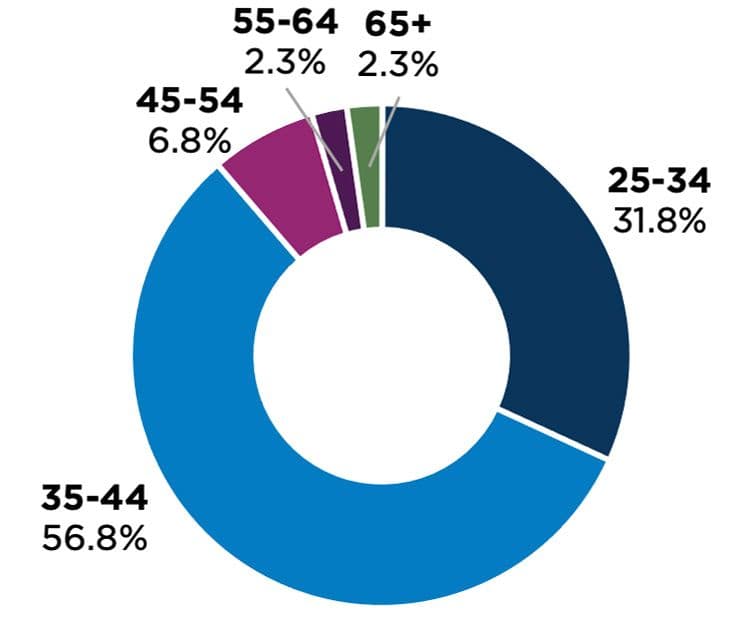
Figure 5: Participants had a wide range of household incomes
Percentages of focus group participants in each household income category
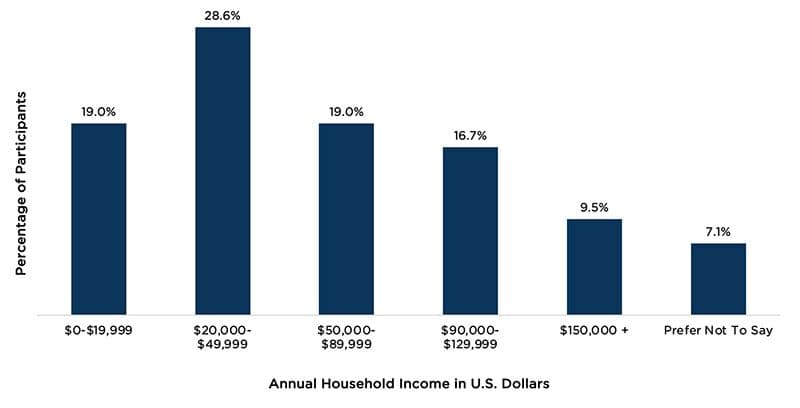
Most participants (57%) were ages 35 to 44, with an overall age range from 25 to 65+. They were also economically diverse, with about half (47.5%) reporting a household income below $50,000 and slightly less reporting a household income of $50,000 or higher (45.2%). Nearly three in four participants (73%) had 1 to 3 children, and slightly more than one quarter (27%) had 4 to 6 children ages 2 months to 30 years. For this study, we asked participants to focus on their children ages 17 and younger. Participants resided in 33 distinct ZIP code areas in the four census regions of the United States: North (New York and Pennsylvania), South (Florida and Tennessee), West (California and Washington), and Midwest (Michigan and Ohio). The primary cities represented were New York City, Philadelphia, Tampa, Nashville, Sacramento, Seattle, Detroit, and Cleveland. Participants had lived in their communities for a median of 6 years, with a range of 1 to 45 years.
Findings
Participant-identified PCRs
Participants identified PCRs through map drawings and focus group discussions. Based on the definition of PCRs shared with participants at the beginning of the study, we categorized these PCRs as people, places, or things.
People
Almost half of the participants (45%) identified family network members—including neighbors, friends, and extended family members and fictive kin—as sources of protection and well-being for their families. Nearly one in five participants (18%) identified health and human services professionals such as social workers, case managers, mental health counselors, and behavioral therapists. Multiple participants named one or more educational professionals from early care providers to university faculty (11%), as well as informal and formal advisors (9%), who served as coaches, pastors, and mentors in their communities.
People commonly identified as PCRs for Black children and families
- Family networks
- Health and human services professionals
- Educational professionals
- Advisors and mentors
Places
Places (i.e., various facilities and locations) was the largest category of PCRs. Of note, participants in the West and Northeast regions of the United States named more specific PCRs in this category than those in the Midwest and South.[5] Across regions, most participants (84%) named recreational areas and green spaces (e.g., parks, pools, and community centers) as protective resources for their families. More than three quarters of the participants (77%) identified schools and other educational and cultural facilities such as libraries and cultural centers. Forty-three percent of participants named religious institutions, and the same percentage described food and grocery outlets (including grocery stores, food pantries, and community gardens) as places promoting their families’ well-being. Two in five participants (41%) identified the houses of their families and friends as places of comfort, joy, and protection. One in four named community-based and public and social service organizations, and slightly more (27%) identified large and small businesses as protective resources. Finally, over 10 percent of respondents described health and wellness centers (14%) and jobs and workplaces (11%) as places advancing family protection and well-being in their communities.
Places commonly identified as PCRs for Black children and families
- Recreational areas and green spaces
- Schools and other educational and cultural facilities
- Religious institutions
- Food and grocery outlets
- Homes of family network members
- Businesses
- Community-based and public and social service organizations
- Health and wellness centers
- Jobs/workplaces
Things
Most things that participants identified as protective fell into three areas. Two in five participants (41%) identified advisement and extracurricular activities (e.g., arts, sports, mentoring, and coaching) as protective community resources. Another 34 percent named cultural and community connections such as love, respect, compassion, and belonging. Finally, 30 percent of participants named essential services and assistance—including high-quality, affordable housing and public transportation and infrastructure—as community resources protecting the well-being of their families.
Things commonly identified as PCRs for Black children and families
- Advisement and extracurricular activities
- Cultural and community connections
- Essential services and assistance
Perceptions of the benefits of PCRs and any risks associated with limited access
Participants described the distinct, yet mutually reinforcing, benefits of the protective people, places, and things in their communities. These benefits centered around health, safety, and positive child and youth development. Participants also described the risks to child and family well-being when PCRs were limited or inaccessible.
People
Participants associated family networks with several benefits; these included providing child supervision, promoting social connections, and serving as role models and mentors. Health and human services professionals, such as case workers and social service providers, were described as important for linking families to essential services and helping parents navigate difficult life decisions and circumstances, such as determining when to return to work after childbirth and how to identify high-quality, affordable child care. The benefits associated with supportive educational professionals included academic support, guidance, and caring discipline for children and youth. In particular, women educators were valued as “other mothers,” investing in children often until (or even through) emerging adulthood. Additionally, natural mentors and advisors, like coaches, were described as safe adults with whom children and youth could communicate, and whom parents and caregivers relied on to assist in their children's development.
“My cousins and things, they live out here, and they've been a huge support as far as helping out. My husband travels a lot for work, and like I said, I’m out here essentially by myself, so they come a lot to help out with the kids and ... they've been a huge help. Without them, all the stuff I do would not be possible.” (Jazmine, Seattle, WA)
“… My resource coordinator, Nate, he's been great with my housing situation … me and my kiddos, I’ve kind of been struggling with homelessness for about three years now. So ... with shelters being full and stuff like that, it was just great to kind of have somebody in one of those programs that was able to kind of advocate for us …” (Neena, Sacramento, CA)
As previously noted, within this category of PCRs, participants most consistently described family networks as providing essential benefits for themselves and their children. In contrast, when family networks were described as “small” or “limited,” participants reported feelings of isolation, mental stress, and an inability to take full advantage of educational and professional opportunities.
“So, for me, for my well-being and mental health, I wish … my parents were closer to kind of ease the burden on the paternal grandparents and plus, you know, they’re my parents.” (Ruby, New York City, NY)
Places
As previously noted, places was the largest PCR category identified by participants. A commonly mentioned benefit of many locations was their safety, which participants viewed as fundamental to their families’ well-being. From recreational and green spaces like parks to educational and cultural facilities such as libraries, parents and caregivers emphasized their value as safe places for children to learn, live, and grow—and for families to experience joyous life moments and events. Participants also described the homes of family members and religious organizations such as churches as spaces for multigenerational guidance, support, and belonging. Community-based organizations, public and social service agencies, and food and grocery outlets helped families meet their basic needs such as food, shelter, and clothing.
Additionally, participants described various benefits associated with local businesses and jobs, highlighting their role in enhancing community vitality by providing goods, services, and spaces for social interaction. They also noted that these businesses contribute to economic security for families and offer potential work experiences for youth. Several families—particularly those with children experiencing health conditions like asthma, autism, or attention-deficit/hyperactivity disorder—identified health and wellness facilities (including hospitals, clinics, and pharmacies) as essential protective resources. These facilities provided families with accessible medical care, therapeutic services, and early interventions.
“We love the rec center. We love to go there and play basketball, work out, swimming, especially in the summertime.” (Jocelyn, Detroit, MI)
“… Living around the corner from the food pantry, we got a case manager at the food pantry, and they would have swap meets and stuff like that. And so, it was a big help just to know if we are running out of food, we can go to the food pantry.” (Joseph, Philadelphia, PA)
Families without access to these places reported unmanaged health conditions and limited emotional and behavioral support. They also reported fewer opportunities for artistic development and positive racial identity formation. Finally, they described the inaccessibility of these spaces as a factor diminishing their opportunities to experience family togetherness and joy.
“... I would love to see our parks have swings. As far as I understand, there's only one park that has a swing in EC [East Cleveland]. So, parks with swings, simple; ground keeping as well … but also, nice ground covering for children, the like rubbery kind, right, that is safe. Because right now we're just getting mud anytime it rains.” (Mysty Brightstar, Cleveland, OH)
Things
Participants described the benefits of the protective things in their communities primarily in terms of keeping their children active and out of danger, and helping them realize their goals and potential. For example, when recounting the benefits of advisement and extracurricular activities, participants described the sense of accomplishment their children experienced in sports, arts, and entrepreneurial activities, as well as the mental health and social rewards. Participants also emphasized that cultural and community connections offered significant mental and emotional benefits. They noted that, while these connections are more challenging to establish and maintain today than in the past, they remain just as crucial for the well-being of children and families. Finally, when discussing the importance of essential services and assistance, they noted the sense of security their families experienced in having suitable clothing, reliable transportation, and healthy food.
“Gymnastics is like her little getaway. She gets to go and have fun with her gymnastic friends and stuff like that." (Zoe, Nashville, TN)
“Having my daughter grow up in the same radius has kind of been important … it's expanded because everybody's moved out, but everybody still comes back to this community because this is where we started.” (Coach, New York City, NY)
Participants further shared that a lack of access to protective things limited their children’s opportunities to develop life skills and talents. For example, participants described how a lack of cultural and community connections diminished their families’ resilience and overall quality of life. Additionally, these parents and caregivers reported that, without essential services like affordable housing, they felt as if they were failing their children. In this context, they emphasized the importance of culturally responsive and respectful interactions with service providers that did not make them feel ‘demeaned’ or ‘stereotyped.’
“It's important that you have a place to stay. How can you raise your family if you have to worry about, ‘okay, if I can't stay here, now we have to live in a car,’ ‘now we have to stay in a hotel,’ or ... Do I pick some place that's safe compared to having some place that I can afford? So, it's like, now, I can't do what I would want to do for my child to protect them because I have to go where I can afford.” (Dre, Tampa, FL)
Discussion and Conclusion
Key findings from our community mapping study on PCRs conducted with 44 Black parents and caregivers highlight how policymakers and practitioners can promote the well-being of Black children and families. Supporting family and social networks, investing in neighborhood amenities, promoting community business development, and providing social services to meet families’ basic needs are strategies that can help ensure that Black children and families have the resources they need to thrive.
Several local and state initiatives are underway that hold promise for creating the protective communities that participants desire for their children and families. Such initiatives showcase the importance of community engagement in creating more protective communities for Black children and families, and underscore the necessity of multi-sector collaboration in reversing historical disinvestment in Black communities.
- Minnesota’s Whole Family Systems Initiative is a collaboration among state agencies, local organizations, families, and communities to support comprehensive, multi-generational approaches to family well-being. With a focus on racial equity, the initiative seeks to preserve and strengthen families while expanding their social capital (i.e., the interpersonal relationships that foster mutual benefit).
- Through Rebuild, an initiative largely funded through a beverage tax, Philadelphia has invested over $400 million in its parks, recreation centers, and libraries—prioritizing communities that have suffered years of deferred maintenance and lack of investment. The initiative also includes a workforce development component to increase the percentage of underrepresented groups engaged in reconstructing and revitalizing the city’s amenities.
- In a community-led effort to address the lack of healthy food options in Fairfield, Alabama, Urban Hope Community Church and a veteran of the supermarket industry, James Harris, used start-up funding from nonprofit ministries to establish Carver Jones Market, the first grocery store to offer fresh produce and meats in the predominantly Black city in over a decade.
- Community land trusts are a way to promote land stewardship for the benefit of local communities. The Africatown Community Land Trust in Seattle, Washington—a collaboration of real estate professionals, business executives, entrepreneurs, other professionals, and community members—has helped promote business development and economic revitalization in the city’s historically Black Central District.
To ensure the success, sustainability, and expansion of such initiatives, it is essential to rigorously examine factors that facilitate or hinder their implementation. Studies are also needed to document initiatives’ short and long-term effects on the well-being of Black children and families. Thus, focused research to inform policy and practice can play a crucial role in building protective communities that foster Black children and families’ progress, hope, and joy.
Footnotes
[1] See “Decade: 1970-1979” in Sanders et al., 2024, A 100-Year Review of Research on Black Families, Volume II: 1970-2019.
[2] The study was designed to include five participants at each site. However, some sites recruited more than five participants, and we made accommodations to include them. In Nashville, there were seven participants and in Seattle and Tampa there were six participants.
[3] Approximately 7 percent of participants preferred not to share their annual household incomes.
[4] While participants differed in several ways—including by age, income, and geographic location—they were similar in other respects. Most resided in urban and suburban neighborhoods, identified as cisgender men and women, and were born in the United States. This highlights the need for more intentional efforts to examine PCRs for Black children and families, particularly those in rural areas and within LGBTQ+ and immigrant communities.
[5] The average number of named PCRs in the “Places” category was 20.5 in the West, 13.5 in the Northeast, 7.5 in the Midwest, and 6.5 in the South.
Suggested citation
Sanders, M., Martinez, D. N., & Winston, J. (2024). Black families define protective community resources that support their well-being. Child Trends. DOI: 10.56417/8784s1110u